You Won’t Believe What Lusaka’s Hidden Terrain Hides
Lusaka, Zambia doesn’t just sit on flat African plains—it’s built on a secret landscape most travelers never notice. I stumbled on something wild: ancient rock formations, hidden valleys, and terrain that shifts like a living map. This isn’t your typical city trip. Beneath the markets and roads lies a geological surprise that changes how you see the capital. If you think Lusaka is just bureaucracy and traffic, think again. The city rests on a foundation shaped by millions of years of natural forces—subtle ridges, weathered granite outcrops, and valleys carved quietly by time and rain. These features are not dramatic canyons or towering cliffs, but their quiet presence tells a story far deeper than any guidebook reveals. This is a terrain that rewards attention, offering quiet wonder to those who step off paved paths and look down—not just around.
First Glimpse: What Makes Lusaka’s Terrain Special
Lusaka sits at an elevation of about 1,279 meters (4,200 feet) above sea level, perched on the central African plateau. This positioning gives the city a mild climate and a gently undulating topography that is easy to overlook in the hustle of daily life. Unlike cities built on flat plains or dramatic mountains, Lusaka’s landscape is defined by subtle shifts—soft swells in the earth, minor drops in elevation, and the occasional rocky spine pushing through the soil. These features are the result of ancient geological processes, where the slow cooling of magma formed the basement complex of granite and gneiss that underlies much of southern Africa. Over hundreds of millions of years, wind, rain, and temperature fluctuations have weathered these hard rocks into rounded forms, creating a terrain that feels both solid and softly sculpted.
The city’s development has not erased these natural patterns—it has adapted to them. Roads curve to avoid large outcrops rather than blasting through them. Houses are built on slopes with careful attention to drainage and stability. In neighborhoods like Rhodes Park and Ibex Hill, homes are nestled into the contours of the land, with gardens stepping down small inclines. Even major thoroughfares like Cairo Road and Church Road follow the natural dip and rise of the ground, a subtle testament to how the city grew with, not against, the land. This integration is not always intentional but reflects a practical response to a terrain that cannot be ignored, only respected.
What makes Lusaka’s geography particularly fascinating is its position within the Miombo woodland biome, a vast ecoregion stretching across central and southern Africa. This ecosystem thrives on nutrient-poor, well-drained soils—conditions that are enhanced by the rocky, fractured terrain beneath the city. The Miombo’s signature trees, such as Brachystegia and Julbernardia, have deep root systems that anchor into cracks in the granite, drawing moisture and minerals from deep underground. These trees, with their broad, umbrella-like canopies, provide shade and habitat, creating microenvironments that support a surprising diversity of life. The interplay between geology and ecology is evident in every patch of woodland, where rocks and roots grow together in quiet harmony.
Off the Map: Discovering the Hidden Valleys and Ridges
Beyond the well-known parks and residential zones, Lusaka harbors a network of lesser-known valleys and ridges that remain off most visitors’ radar. One such area lies near Chamba Valley, a stretch of land that dips unexpectedly between residential neighborhoods. At first glance, it appears to be just another green space, but a short walk reveals a dramatic change in elevation—a descent of nearly 20 meters through a narrow, tree-lined ravine. The air cools as you go down, and the sounds of traffic fade, replaced by birdsong and the rustle of leaves. This is not a constructed park but a natural formation preserved by circumstance rather than design.
Similar features can be found in the northeastern suburbs, where the land rolls more noticeably. In areas like Kalingalinga and Matero, small ridges create natural vantage points, offering views of the city skyline framed by acacia trees and rocky outcrops. These spots are not marked on tourist maps, nor are they equipped with trails or signage. Access is often informal—through footpaths worn by local residents or gaps between compounds. Yet, they offer some of the most authentic experiences of Lusaka’s natural character. Hiking these routes reveals sudden drops, hidden clearings, and microclimates that shift with elevation and sun exposure. A south-facing slope may be dry and dusty, while a north-facing one retains moisture and supports denser vegetation.
These spaces remain under the radar for several reasons. Tourism in Zambia has traditionally focused on world-renowned attractions like Victoria Falls, South Luangwa National Park, and Lake Kariba. Urban natural features are rarely promoted, and city dwellers themselves often overlook them in favor of more structured recreation. Additionally, the lack of formal access points and safety information discourages casual exploration. Yet, for those willing to look, these hidden terrains offer a different kind of adventure—one that doesn’t require a safari vehicle or expensive permit, just curiosity and comfortable shoes. They are quiet reminders that nature persists even in the heart of a growing city.
Nature’s Architecture: Rock Formations That Look Man-Made
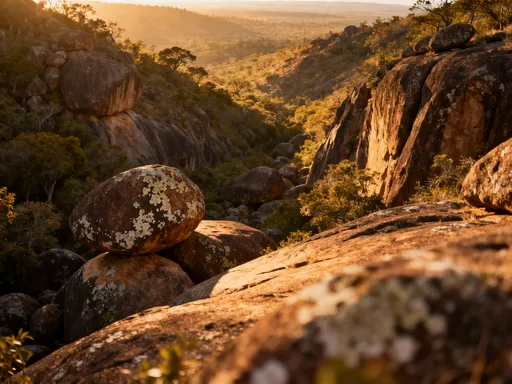
One of the most striking aspects of Lusaka’s hidden terrain is the presence of large granite outcrops that appear almost sculpted. These formations, some rising several meters above the surrounding land, consist of massive boulders balanced in seemingly impossible ways. Cracks and joints in the rock, formed by millions of years of thermal expansion and contraction, have created natural arches, tunnels, and sheltered alcoves. In certain light—especially during sunrise or late afternoon—the surfaces glow with warm hues of pink and gold, highlighting the intricate patterns of mineral deposits.
These rock systems are not just visually compelling; they have played a functional role in local life for generations. The crevices and overhangs have served as natural shelters, offering protection from rain and sun. Oral histories from elders in nearby communities tell of families using these spaces during the rainy season or as temporary rest stops while traveling between villages. Some formations even show faint traces of ancient rock art, though these are not widely publicized to prevent damage. Unlike the famous rock sites of Zimbabwe or Namibia, Lusaka’s formations are modest in scale but rich in quiet significance.
Importantly, these sites are generally safe for casual exploration. The granite is stable, and most outcrops can be approached without technical climbing. Paths are informal but well-trodden in places, especially near residential areas where children use the rocks as natural playgrounds. The balance between accessibility and preservation is delicate—while these formations are not fragile in a geological sense, increased foot traffic without proper management could lead to erosion or littering. For now, they remain peaceful spaces where one can sit, listen to the wind move through the cracks, and feel the deep stillness of stone that has stood for eons.
Green Over Stone: How Vegetation Clings to Unusual Ground
The resilience of plant life in Lusaka’s rocky terrain is a testament to nature’s adaptability. The Miombo woodland, dominant in this region, has evolved to thrive in conditions that would challenge many other ecosystems. The soil here is thin and nutrient-poor, often consisting of little more than decomposed granite and organic matter from fallen leaves. Yet, the trees and shrubs that grow here do so with quiet determination. Their roots snake into fissures, anchoring firmly in spaces barely wider than a finger, drawing moisture from deep within the rock.
Seasonal changes dramatically alter the appearance and accessibility of these areas. During the dry season, which runs from May to October, the landscape takes on a golden-brown hue. Leaves drop from many trees, revealing the full extent of the terrain—rocky slopes, exposed roots, and the skeletal outlines of ancient branches. This is the best time for exploration, as paths are dry and visibility is high. The lack of dense foliage makes it easier to see geological features and navigate through the underbrush. In contrast, the rainy season, from November to April, transforms the same spaces into lush, green mazes. Grass grows rapidly, and moss covers rock surfaces, making some trails slippery and difficult to follow. But this season also brings life—wildflowers bloom in crevices, and the air fills with the scent of wet earth and fresh growth.
This dynamic environment supports a surprising variety of wildlife. Birdwatchers may spot the African fish eagle soaring above valleys, or the colorful lilac-breasted roller perched on a rocky outcrop. Smaller creatures like rock hyraxes, agamas, and various species of lizards find shelter in the crevices, emerging in the warmth of the sun. Insects, including butterflies and beetles adapted to rocky habitats, contribute to the ecosystem’s balance. Even larger mammals, such as bushbuck, have been sighted in the more secluded areas, especially at dawn or dusk. The combination of elevation changes, sheltered spaces, and diverse vegetation creates microhabitats that support biodiversity within the urban fringe.
Local Wisdom: How Residents Use the Land Differently
Long before Lusaka became a modern capital, the people living in this region developed practical ways to work with the land rather than against it. This knowledge has been passed down through generations and remains visible in how communities interact with the terrain today. In hilly neighborhoods, small-scale farmers use simple terracing techniques to grow crops like maize, cassava, and vegetables on slopes. By creating flat, stepped plots held in place with stones or logs, they prevent soil erosion and maximize usable space. These gardens are not large commercial operations but family-run plots that contribute to household food security.
Water management is another area where local wisdom shines. The rocky ground does not absorb water quickly, leading to runoff during heavy rains. Residents have learned to direct this flow using natural contours and simple channels, guiding water away from homes and into collection points. In some areas, small dams or retention ponds have been built at the base of slopes to capture runoff for irrigation. This knowledge is not formalized in engineering plans but is part of everyday practice, shared through observation and experience. It reflects a deep understanding of how water moves across this unique landscape.
Community spaces also take advantage of the natural topography. In certain valleys, the land forms natural amphitheaters—bowl-shaped depressions surrounded by higher ground. These areas are often used for gatherings, children’s games, or informal meetings. The shape of the land amplifies sound slightly, making them ideal for storytelling or group discussions. These spaces are not designated parks but emerge organically from the terrain, shaped by both nature and human use. They represent a quiet harmony between people and place, where the land itself becomes part of social life.
Best Ways to Experience It: Low-Impact Exploration Tips
Exploring Lusaka’s hidden terrain does not require specialized skills, but a few practical considerations can enhance both safety and enjoyment. Footwear is essential—sturdy walking shoes with good grip are recommended, as many paths are rocky, uneven, or slippery when wet. Lightweight, breathable clothing is ideal, especially during the warmer months. A wide-brimmed hat, sunscreen, and a reusable water bottle are also important, as shade can be sparse in open areas. Carrying a small backpack with basic supplies—such as a snack, a first-aid kit, and a whistle—adds an extra layer of preparedness.
The best time to visit is early in the morning, between 6:00 and 9:00 a.m. Temperatures are cooler, the air is fresh, and wildlife is more active. This is also when the light is most beautiful, casting long shadows across the rocks and highlighting textures in the landscape. Midday heat can be intense, especially during the dry season, so planning shorter walks or resting during peak hours is advisable. Late afternoon offers another pleasant window, though visibility may decrease as the sun sets behind the ridges.
One of the most valuable resources for exploration is a local guide. Residents from nearby neighborhoods often have intimate knowledge of the terrain—safe routes, hidden clearings, and seasonal changes. Engaging with them not only ensures safer navigation but also enriches the experience with stories and insights that no map can provide. Many are happy to share their knowledge, especially if approached with respect and genuine interest. Supporting local guides also contributes to community-based tourism, promoting sustainable economic opportunities. Above all, visitors should practice Leave No Trace principles: avoid littering, stay on existing paths, and refrain from disturbing plants or wildlife.
Why This Secret Matters: Preserving Lusaka’s Natural Identity
As Lusaka continues to grow, its natural terrain faces increasing pressure from urban expansion. New developments often overlook the importance of topography, leading to construction on fragile slopes, removal of native vegetation, and disruption of natural drainage patterns. In some areas, large rock outcrops have been blasted away to make way for roads or buildings, erasing geological features that took millions of years to form. Unregulated construction on hillsides increases the risk of landslides during heavy rains, threatening both property and lives. These changes not only alter the landscape but also disconnect people from the natural foundation of their city.
Recognizing Lusaka’s terrain as part of its cultural and environmental heritage is essential for sustainable development. These features are not obstacles to progress but integral elements of the city’s identity. They offer ecological benefits—such as natural cooling, water filtration, and habitat preservation—and cultural value through their connection to local history and community practices. Urban planning that incorporates topographical awareness can lead to smarter, more resilient cities. For example, preserving green corridors along valleys can support biodiversity while reducing flood risk. Protecting rock formations as natural landmarks can foster local pride and attract responsible tourism.
Awareness is the first step toward preservation. Both visitors and residents can play a role by learning about the land, respecting its limits, and advocating for its protection. Simple actions—like choosing to explore on foot, supporting local guides, or participating in community clean-up efforts—can make a difference. Educational programs in schools and community centers can help younger generations appreciate the geological and ecological significance of their surroundings. Sustainable tourism initiatives that highlight Lusaka’s natural features, rather than just its political or commercial aspects, can shift perceptions and create new opportunities for conservation.
Lusaka’s hidden terrain isn’t just geology—it’s a story of resilience, adaptation, and quiet beauty beneath the surface. By paying attention to the land, we don’t just see a city differently—we learn to respect it. In a world where urban growth often means paving over nature, Lusaka offers a different possibility: a capital that remembers its roots, literally and figuratively. The rocks, valleys, and trees are not relics of the past but living parts of the present. They invite us to walk slowly, look closely, and listen to the quiet voice of the earth. And in doing so, we may find not just a deeper understanding of a city, but a renewed connection to the natural world that sustains us all.