You Won’t Believe This Floating World in Myanmar
Inle Lake isn’t just a destination—it’s a living, breathing public space where life unfolds on water. I’ve never seen anything like it: floating gardens, stilt-house villages, and locals gliding across the lake in iconic one-legged boats. This isn’t staged for tourists; it’s everyday life in motion. The sense of community, the rhythm of paddles slicing through misty mornings—it’s authentic, peaceful, and quietly viral-worthy. If you’re craving a place where culture and nature merge in the most unexpected way, this is it.
Arrival and First Impressions
Reaching Inle Lake is part of the experience—a journey that shifts your perspective long before you see the water. Most travelers arrive via Yangon or Mandalay, then take a domestic flight to Heho, a small airport nestled in the Shan Hills. From there, a two-hour scenic drive winds through terraced fields, pine-covered ridges, and quiet villages where ox carts still plod along dusty lanes. As the road climbs, the air cools noticeably, a refreshing change from Myanmar’s tropical lowlands. And then, suddenly, it appears: a vast, silvery expanse shimmering between the hills, ringed by mist and distant mountains.
The first view of Inle Lake stirs something deep—a sense of discovery, of stepping into a world governed by different rhythms. At over 1,000 meters above sea level, the lake spans approximately 45 square miles and sits at the heart of Shan State. Unlike the bustling cities many visit in Southeast Asia, this is a place of quiet movement. There are no cars on the water, no honking horns—just the occasional splash of a paddle, the creak of wooden boats, and the soft murmur of voices from a passing canoe. The lake isn’t a postcard tableau; it’s a working waterway, a shared public space where fishermen, farmers, traders, and families all navigate the same liquid streets.
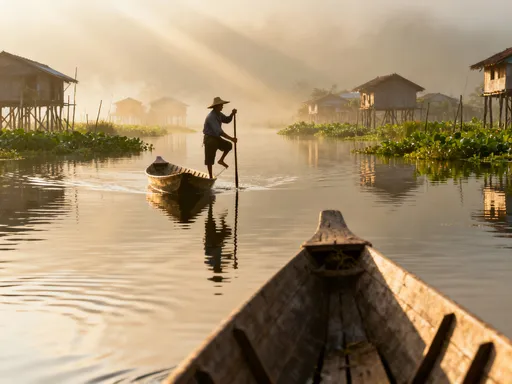
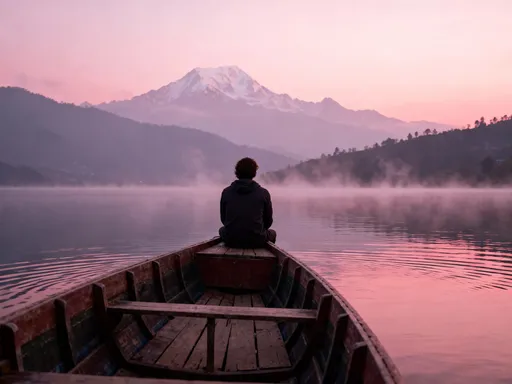
What strikes visitors most is how seamlessly life integrates with the lake. There are no clear boundaries between nature and community. Homes rise on stilts from the lakebed, connected by narrow wooden walkways that sway gently with each passing boat. Children row themselves to school, women carry baskets of vegetables in long canoes, and monks glide across the water in saffron robes. This isn’t tourism theater; it’s daily life played out on an aquatic stage. The stillness of the early morning, when fog drapes the surface like gauze, adds to the sense of reverence. It’s a place that asks you to slow down, to observe, and to listen.
The Floating Gardens: Nature Meets Human Ingenuity
One of the most remarkable features of Inle Lake is its floating gardens—living proof of human adaptation and ecological intelligence. These aren’t decorative displays but functional agricultural plots that have sustained families for generations. Built entirely from lake weeds, sediment, and organic matter, the gardens are anchored to the lakebed with bamboo stakes but remain buoyant, drifting slightly with the wind and currents. From above, they look like green patches stitched across the water, forming orderly rows that resemble floating farmland.
Local farmers, primarily from the Intha ethnic group, cultivate a variety of crops on these mobile plots. Tomatoes are the most famous export, grown in abundance and shipped to markets across Myanmar. But the gardens also yield cucumbers, beans, gourds, and even flowers. The method is both simple and ingenious: layers of decaying vegetation are piled into rectangular frames, forming a rich, spongy soil that supports plant growth. As the base decomposes, new layers are added, maintaining the garden’s buoyancy and fertility. This cyclical process has been refined over centuries, making it one of Southeast Asia’s most sustainable farming systems.
What makes the floating gardens more than just an agricultural marvel is their communal nature. While individual families manage specific plots, knowledge and resources are often shared. Neighbors help each other reinforce stakes during the rainy season, and seedlings are frequently exchanged. The gardens are also vulnerable to changes in water levels and pollution, making cooperation essential for long-term survival. Visitors on boat tours often stop to see these gardens up close, marveling at how tomatoes can grow so abundantly without touching solid ground. But beyond the novelty, there’s a deeper lesson: here, food doesn’t come from distant factories or supermarkets—it’s grown right where people live, in harmony with the environment.
Villages on Stilts: Where Community Thrives Above Water
Life on Inle Lake extends far beyond agriculture—it’s a full-fledged aquatic society. Scattered across the northern and central parts of the lake are stilt-house villages such as Nyaung Shwe, Indein, and Kyauk Taung, where homes, shops, schools, and even temples rise from the water on wooden stilts. These structures are built to withstand fluctuating water levels, which can vary by several feet between the dry and rainy seasons. During high water, boats become the only means of access; in drier months, some pathways may touch ground, revealing the lakebed’s muddy floor.
Walking—or rather, walking on elevated wooden bridges—through these villages feels like stepping into a three-dimensional community. There are no streets, only narrow planks that connect homes and lead to communal spaces. Shops sell everything from dried fish to handwoven textiles, all delivered by boat. Children run barefoot across bridges, balancing effortlessly despite the occasional wobble. A local school might consist of a single building on stilts, its classrooms filled with the sound of recited lessons and laughter. Religious life is equally embedded in the landscape: wooden monasteries with upturned eaves rise above the water, their bells ringing softly in the breeze.
The urban design of these villages is organic, shaped by necessity rather than planning. Public space here isn’t defined by parks or plazas but by waterways and walkways. A wide canal functions as a main road, while smaller channels serve as shortcuts between homes. Social interaction happens on docks, in shared courtyards, or from boat to boat. Even funerals and weddings are conducted with boats playing a central role. This vertical, fluid layout challenges conventional ideas of how communities should be organized. It’s a reminder that human settlement doesn’t require concrete or asphalt—just ingenuity, cooperation, and respect for the natural world.
The One-Legged Rowers: A Symbol of Daily Life
No image captures the spirit of Inle Lake quite like the one-legged rowers—Intha fishermen balancing upright in narrow canoes, propelling themselves with a single leg wrapped around the oar. This distinctive technique isn’t a performance for tourists; it’s a practical adaptation born from necessity. By standing and using their leg to row, fishermen gain a higher vantage point, allowing them to see over the tall reeds and floating vegetation that cover much of the lake. Their free hands are then used to manage nets, trap crabs, or steady baskets of fish.
The technique takes years to master and is typically learned in childhood. Boys and girls begin practicing in small boats, mimicking their parents’ movements until the motion becomes second nature. It requires exceptional balance, strength, and coordination—skills honed through daily use rather than formal training. While some tourists may view it as a curiosity, for the Intha people, it’s simply the most efficient way to navigate their watery world. The sight of a fisherman gliding across the morning mist, leg curled around the oar, paddle dipping rhythmically into the water, is both poetic and deeply functional.
Boat tours often include close encounters with these rowers, not as staged demonstrations but as real moments of daily labor. You might see an older man mending a net while his son rows them home, or a woman transporting vegetables from her floating garden. Some visitors hire local guides for full-day excursions, gaining firsthand insight into the rhythms of lake life. The one-legged rowing technique has become a symbol of Inle Lake, not because it’s exotic, but because it embodies resilience, adaptation, and the quiet dignity of everyday work. It’s a visual language spoken across generations—a way of moving through the world that is uniquely suited to this unique environment.
Local Markets and Floating Trade
Trade on Inle Lake is as fluid as the water itself. Every five days, a rotating market cycle brings vendors from surrounding villages to designated landing points such as Indein, Nam Pan, and Taunggyi. These floating markets are not tourist attractions but vital economic and social hubs where goods and information flow as freely as the boats. Traders arrive before dawn, packing their canoes with fresh produce, handmade tools, clothing, and spices. By mid-morning, the market is alive with barter, conversation, and the rich aroma of street food.
What makes these markets special is their diversity. While the Intha people form the majority, you’ll also see Pa-O, Shan, and Danu traders, each bringing regional specialties. A woman from the hills might sell hand-dyed cotton, while a fisherman’s wife offers smoked fish wrapped in banana leaves. The exchange is often done through barter—tomatoes for cloth, herbs for pottery—though cash is increasingly common. There’s a rhythm to the bargaining, a dance of smiles and gestures that transcends language. Children run between boats with baskets of snacks, and elders sit under shade cloths, sharing news and stories.
These markets are more than just places to buy and sell—they’re community events. For many lake residents, especially the elderly or those without motorized boats, the market is their main connection to the wider region. It’s where medical advice is exchanged, marriages are arranged, and festivals are planned. The fact that the market moves from village to village ensures that no community is left out. In an age of digital commerce and global supply chains, these rotating markets stand as a testament to localized, human-scale economies. They prove that trade doesn’t need malls or algorithms—just trust, tradition, and a well-paddled boat.
Cultural Preservation and Responsible Tourism
As Inle Lake gains international attention, the balance between tourism and preservation becomes ever more critical. While visitors bring economic benefits, they also introduce challenges: plastic waste, water pollution, and pressure on fragile ecosystems. The floating gardens, already threatened by declining water quality and invasive species, are particularly vulnerable. Increased boat traffic can disturb fish populations, and poorly managed resorts may discharge untreated wastewater into the lake.
Fortunately, local communities and conservation groups are taking action. Several initiatives promote eco-friendly practices, such as banning single-use plastics in certain villages and encouraging biodegradable packaging. Some homestays and tour operators have adopted sustainable models, training local guides, supporting artisan cooperatives, and limiting group sizes. Community-based tourism projects allow visitors to stay with families, share meals, and learn traditional crafts—experiences that benefit hosts while offering guests a more authentic connection.
Travelers can contribute by making mindful choices. Hiring local guides ensures income stays within the community. Visiting weaving workshops, blacksmiths, or cheroot (traditional cigar) makers supports cultural heritage. Respecting sacred sites—such as lakeside pagodas and meditation centers—is essential; these are not photo opportunities but places of devotion. Avoiding loud behavior, refraining from touching floating gardens, and using reusable water bottles are small actions with meaningful impact. The goal isn’t to stop tourism but to reshape it—so that visitors become temporary participants in lake life, not disruptions to it.
Why Inle Lake Could Go Viral—And Should Be Protected
Inle Lake has all the ingredients of a viral travel destination: stunning visuals, cultural uniqueness, and a story of harmony between people and nature. Imagine a short video of a one-legged rower gliding through morning mist, tomatoes growing on a floating garden, children laughing on a wooden bridge. Shared on social media, such moments could captivate millions. And unlike overcrowded hotspots like Bali or Venice, Inle remains relatively untouched—authentic in a way that feels increasingly rare.
But virality comes with risk. A sudden surge in visitors could overwhelm infrastructure, strain resources, and erode the very qualities that make the lake special. The danger isn’t just environmental—it’s cultural. When daily life becomes a performance for cameras, the soul of a place can fade. The quiet dignity of the Intha fishermen, the communal spirit of the floating markets, the peaceful rhythm of lake life—all could be compromised by mass tourism.
That’s why any global attention must come with responsibility. The world should celebrate Inle Lake not as a backdrop for selfies, but as a model of sustainable living. It shows how communities can thrive in delicate ecosystems through cooperation, innovation, and respect. It challenges the notion that progress requires concrete and cars. And it offers a vision of public space that is fluid, inclusive, and deeply human. If shared wisely, this floating world could inspire a new kind of travel—one rooted in humility, connection, and care.
Inle Lake is more than a travel highlight—it’s a lesson in how public space can be fluid, shared, and deeply human. As the world seeks connection and meaning, this floating world offers a rare glimpse of life in balance. The real magic? It’s not staged. It’s lived. And that’s worth protecting.