This Place Looks Unreal—How I Shot the Blue Lagoon Without Ruining the Wild
You know that feeling when a place is so stunning, you almost don’t want to take a photo because no shot could do it justice? That was me at Iceland’s Blue Lagoon. Surrounded by lava fields and steam rising like breath from the Earth, I realized photography here isn’t just about capturing beauty—it’s about respecting it. This isn’t just a spa; it’s a protected landscape where every click of the shutter comes with responsibility. The water, rich with minerals and glowing under a pale Nordic sky, seemed too surreal to be real. I stood there, camera in hand, wondering not just how to photograph it, but whether I should. In that moment, I began to see travel photography not as documentation, but as a practice of mindfulness and care.
First Impressions: Beauty That Feels Almost Illegal to Photograph
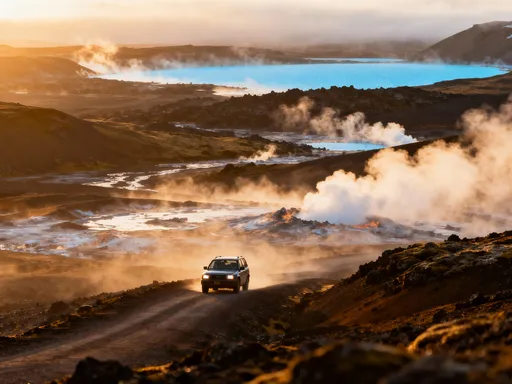
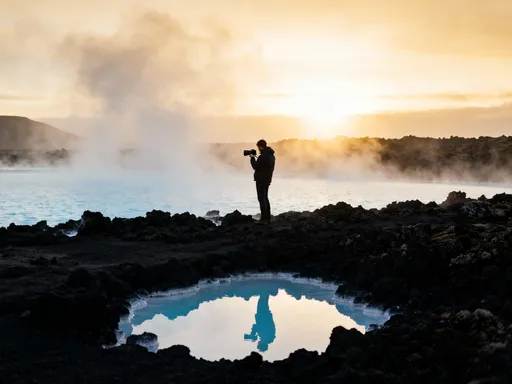
Arriving at the Blue Lagoon for the first time is like stepping into a dream shaped by fire and water. The landscape unfolds in stark contrasts: smooth, milky-blue pools nestled within jagged black lava fields, remnants of ancient volcanic eruptions. Steam curls upward from the surface, drifting like morning mist over a still lake. The air carries a faint mineral scent, clean and earthy, mingling with the cool breeze rolling in from the North Atlantic. It’s a place where nature and human engineering meet, yet the overwhelming sense is one of untouched wildness. You don’t just see the beauty—you feel it in your chest, a quiet awe that borders on reverence.
That emotional response is exactly what makes the urge to photograph so powerful—and so complicated. There’s a temptation to capture every angle, every ripple, every shaft of light piercing through the fog. But with that comes a subtle tension. How do you honor a place through your lens without reducing it to a mere backdrop for a selfie? The Blue Lagoon, while developed for visitors, sits within a protected volcanic zone on the Reykjanes Peninsula. Every structure, every pathway, every bathing area has been designed with environmental sensitivity in mind. The moment you step onto the boardwalks, you’re reminded that this is not just a tourist destination, but a fragile ecosystem sustained by geothermal forces.
As I stood at the edge of the main pool, adjusting my camera settings, I noticed how few people were actually in the water. Most were on the walkways, phones and cameras raised, trying to frame the perfect shot. Yet the most powerful images weren’t the wide panoramas, but the quiet moments: a single figure submerged up to the shoulders, eyes closed, steam rising around them; a hand breaking the surface, sending ripples through the opaque blue. These weren’t staged—they were lived. And they carried more emotional weight than any posed photo ever could. It was then I realized that the best photographs aren’t taken in haste, but in stillness.
The Protected Zone: Why This Isn’t Just a Tourist Trap
The Blue Lagoon is often labeled as one of Iceland’s most commercialized attractions, but that label overlooks a deeper truth: its existence is tightly bound to environmental stewardship. Located on the Reykjanes Peninsula, a region shaped by tectonic activity and frequent volcanic events, the lagoon is fed by runoff from a nearby geothermal power plant. This water, heated naturally by the Earth’s core and rich in silica and minerals, would otherwise be released into the environment. Instead, it’s channeled into the lagoon, creating a sustainable use of a renewable resource. The site operates under strict environmental regulations, monitored by Icelandic authorities to ensure minimal impact on the surrounding landscape.
What many visitors don’t realize is that the entire area is part of a protected geological zone. The black lava fields aren’t just dramatic scenery—they are fragile ecosystems slowly being reclaimed by moss and lichen, species that take decades to establish. Foot traffic is carefully managed through elevated wooden walkways and designated paths. These aren’t arbitrary rules; they exist to prevent soil compaction, erosion, and the destruction of slow-growing vegetation. Even the buildings are designed to blend into the terrain, with low profiles and muted colors that don’t compete with the natural palette.
Visitor numbers are also controlled. Unlike some natural attractions that suffer from overtourism, the Blue Lagoon requires reservations, effectively limiting daily attendance. This not only improves the guest experience but reduces strain on the infrastructure and environment. Waste water is filtered and partially returned to the ground, while silica byproducts are harvested for use in skincare products, minimizing waste. These practices reflect a broader Icelandic ethos: that natural wonders should be shared, but never exploited.
Tourism and conservation are often seen as opposing forces, but the Blue Lagoon demonstrates how they can coexist. The revenue generated supports ongoing environmental monitoring and restoration projects across the peninsula. Educational displays throughout the site explain the geothermal process, the importance of moss beds, and the risks of climate change to Iceland’s unique landscapes. For the thoughtful traveler, this context transforms a simple spa visit into a lesson in sustainability—one that lingers long after the mineral water has been rinsed from the skin.
Shooting the Scene: What Gear Worked (And What Didn’t)
Photographing the Blue Lagoon demanded more than just a good eye—it required preparation. I used a weather-sealed mirrorless camera with a 24-70mm f/2.8 lens, ideal for both wide landscapes and tighter environmental portraits. A polarizing filter proved invaluable, helping to cut through the glare on wet surfaces and enhance the contrast between the blue water and dark rock. I also carried a wide-angle lens for expansive shots of the steam-wrapped pools, though I quickly learned that too wide an angle could distort the scene, making it feel artificial rather than immersive.
The biggest challenges were environmental. Steam, while beautiful, diffused light unpredictably, softening edges and muting colors. Midday sunlight, when the sky is pale and flat, created harsh reflections on the water’s surface, turning potential shots into overexposed patches of white. I found the best light came during the early morning hours, just after opening, when the lagoon was nearly empty and the mist hung low, glowing in the slanted sunlight. Late afternoon offered a different mood—cooler tones, longer shadows, and a quieter atmosphere that lent itself to more contemplative compositions.
Moisture was a constant threat. Even with weather-sealed gear, condensation formed on the lens within minutes of stepping outside. I kept a microfiber cloth and a protective rain cover on hand, wiping down the camera between shots. I avoided changing lenses on-site, knowing that dust and moisture could damage the sensor. A compact tripod helped stabilize long exposures, especially in low light, though I used it sparingly to avoid obstructing pathways or disturbing other guests.
One piece of gear I brought but rarely used was a drone. While aerial photography can offer stunning perspectives, drone use at the Blue Lagoon is strictly regulated. Unauthorized flights are prohibited due to privacy concerns, potential disturbance to wildlife, and safety issues around geothermal infrastructure. I respected those rules, choosing instead to explore ground-level angles that felt more intimate and grounded. Sometimes, the most powerful images come not from above, but from within.
Responsible Framing: How to Photograph Without Exploiting the View
Photography at sensitive natural sites isn’t just about technical skill—it’s an ethical practice. One of the most important lessons I learned at the Blue Lagoon was to never sacrifice the environment for a better shot. I watched as a few visitors stepped off marked paths to get closer to the water’s edge, crushing delicate moss beds in the process. In one instance, a staff member gently but firmly redirected a guest who had climbed onto a lava rock for a panoramic selfie. These moments were reminders that every footstep has consequences, especially in an ecosystem where recovery takes decades.
Responsible framing means staying on designated walkways, even when the perfect composition seems just out of reach. It means using your zoom lens rather than trespassing into restricted zones. It means considering not just what you include in the frame, but what you leave undisturbed outside of it. I made a point to include natural context in my photos—moss-covered rocks, distant ridges, the texture of cooled lava—elements that tell a fuller story about the landscape’s complexity. These details ground the image in reality, reminding viewers that this beauty isn’t staged, but earned through geological time.
I also avoided using filters or heavy editing to exaggerate colors. The Blue Lagoon’s water is naturally blue due to the way light scatters off suspended silica particles—a scientific phenomenon, not a Photoshop trick. By preserving the image’s authenticity, I hoped to reflect the truth of the place, not a fantasy. This approach extends to sharing photos: captioning them with location details, conservation notes, and travel ethics can turn a simple post into an educational moment.
Drones, while tempting, should be used only when permitted and with full awareness of their impact. Beyond legal restrictions, there’s a moral dimension: the sound of a drone can disrupt the peace of a natural space, startling birds or disturbing other visitors seeking quiet. The best photographs are those taken with patience and respect, not speed and intrusion. When we choose to honor the boundaries of a place, our images gain not just beauty, but integrity.
Hidden Perspectives: Lesser-Known Angles That Honor the Landscape
While the main lagoon draws the most attention, some of the most compelling photographic opportunities lie just beyond the central pools. Along the walking trails that wind through the lava field, smaller geothermal pools bubble quietly, their surfaces shimmering with heat distortion. Steam vents hiss from cracks in the rock, creating natural frames of mist that shift with the wind. These quieter areas, often overlooked, offer a more intimate connection to the geothermal activity that defines the region.
I spent nearly an hour photographing textures: the cracked surface of dried silica mud, the delicate ripples caused by a single drop of water, the condensation beading on the glass walls of the spa buildings. These macro details reveal a world invisible to the casual observer. A close-up of moss clinging to lava rock, backlit by morning sun, became one of my most striking images—not because it was dramatic, but because it told a story of resilience and slow growth.
There are also vantage points slightly removed from the main complex. From an elevated walkway near the retreat hotel, I captured a wide shot of the entire lagoon nestled in the black rock, surrounded by rolling fog. Another favorite angle came from the edge of the silica mud mask bar, where the reflection of steam and sky danced in the still water. These perspectives didn’t require special access—just patience and a willingness to look beyond the obvious.
Some areas are clearly marked as off-limits, and for good reason. These zones protect fragile formations, ongoing geothermal processes, or sensitive habitats. Respecting these barriers isn’t a limitation—it’s part of the narrative. A photograph that includes a warning sign or a rope barrier can still be powerful, even beautiful, because it acknowledges the rules that keep the landscape intact. Sometimes, what you choose not to photograph speaks louder than what you do.
From Click to Conscience: What My Camera Taught Me About Preservation
Holding a camera at the Blue Lagoon changed the way I moved through the space. Instead of rushing from one viewpoint to the next, I slowed down, observing more carefully. Framing a shot required attention to light, angle, and composition—but it also made me more aware of my surroundings. I noticed the way the steam curled in the wind, how the water changed color with the sky, how the silence between sounds—footsteps, laughter, distant hissing—created a kind of rhythm. Photography became a form of meditation, a way of deepening my connection to the place.
This mindfulness naturally extended to environmental awareness. The more I looked, the more I cared. I began to see the moss not as a carpet, but as a living community. I noticed how the boardwalks protected the ground beneath. I appreciated the quiet efforts of staff who monitored guest behavior and maintained the site’s integrity. When I saw someone step off the path, I felt a pang of concern—not judgment, but protectiveness. That shift—from observer to steward—was one of the most unexpected outcomes of my visit.
I recall one moment clearly: a woman waded into a shallow edge of the pool, phone raised, trying to capture a reflection. A staff member approached calmly and explained that even brief contact with certain areas could disrupt microbial life or damage silica deposits. She apologized and stepped back. That interaction stayed with me. It wasn’t about policing tourists—it was about shared responsibility. Beautiful images should inspire protection, not just admiration. When we share photos of pristine places, we also share the duty to keep them that way.
Photography, at its best, is not about conquest. It’s not about proving you were there, or getting the most likes. It’s about bearing witness—with humility, with care. The camera didn’t just record what I saw; it taught me how to see. And in doing so, it deepened my commitment to preserving the wild, fragile beauty of places like the Blue Lagoon.
Bringing It Home: Sharing Images That Tell the Whole Story
After returning home, I faced a new question: how to share my photos in a way that honored the experience? I resisted the urge to post only the most dramatic shots. Instead, I curated a small series that included not just the iconic views, but the quiet details—the moss, the steam vents, the warning signs, the empty walkways at dawn. Each image came with a caption that provided context: the geological history of the site, the importance of moss ecosystems, the rules in place to protect the area.
I used social media not just to showcase beauty, but to educate. On Instagram, I tagged the official Blue Lagoon account and included hashtags like #ResponsibleTravel and #ProtectIceland. I wrote a short blog post explaining why I chose not to use a drone and how visitor limits help preserve the site. The response was encouraging—many followers shared their own experiences and asked questions about sustainable tourism. It reminded me that images have power beyond aesthetics; they can spark conversation, inspire change, and foster collective care.
Sharing responsibly also means being honest about our role as visitors. I included a note about my own learning process—how I almost stepped off the path for a better angle, how I had to remind myself to slow down, to wait. Vulnerability in storytelling builds trust. When we admit our mistakes, we invite others to reflect on theirs. The goal isn’t perfection, but progress.
The best travel photography doesn’t just show a place—it invites others to protect it. When we caption a photo with conservation facts, when we credit the land and its stewards, when we choose authenticity over spectacle, we turn images into acts of respect. And in a world where natural wonders are increasingly threatened, that kind of photography matters more than ever.
Photographing the Blue Lagoon changed how I see travel imagery. It’s not about capturing dominance over a landscape, but harmony with it. Every photo we take in protected areas carries weight—either adding to the damage or helping preserve the wild beauty for others. When done right, photography becomes an act of respect. And honestly? That makes the pictures mean so much more.