You Won’t Believe Beirut’s Underground Art Scene
Beirut is so much more than a city rebuilding—it’s a creative explosion hiding in plain sight. I wandered into abandoned buildings turned galleries, stumbled upon street murals that hit me right in the chest, and met artists turning pain into powerful beauty. This isn’t just art—it’s resistance, identity, and soul. If you think you know Beirut, think again. Its underground art spaces are redefining culture, one bold brushstroke at a time.
The Heartbeat of a Reborn City
Beirut has long been shaped by layers of history—wars, occupations, economic shifts, and natural disasters—all leaving indelible marks on its streets and spirit. Yet from each period of destruction emerged a wave of creative resilience. The city’s underground art scene today is not a sudden trend, but the latest chapter in a decades-long narrative of survival through self-expression. Artists in Beirut have learned to work not despite chaos, but within it, transforming ruins into studios, rubble into raw material, and silence into dialogue.
Following the civil war that ended in 1990, Beirut began a slow and uneven recovery. Reconstruction efforts focused on commercial districts like downtown, often at the expense of historical authenticity and community memory. In response, a generation of artists rejected polished, state-sanctioned narratives and instead turned to grassroots creativity. Abandoned buildings, once symbols of neglect, were reclaimed as makeshift galleries and performance spaces. These early interventions laid the foundation for today’s decentralized, anti-establishment art movement—one rooted in truth rather than spectacle.
The 2020 port explosion, which devastated large parts of eastern Beirut, became another turning point. Nearly 200 people lost their lives, thousands were injured, and entire neighborhoods were reduced to debris. But amid the grief, something unexpected emerged: an outpouring of public art. Walls cracked by shockwaves became canvases. Rubble-strewn lots hosted impromptu exhibitions. Artists, many of whom had lost homes and studios, began creating again almost immediately—not for profit, but as acts of collective healing. Their work carried no pretense; it was urgent, emotional, and deeply human.
What makes Beirut’s artistic pulse unique is its refusal to be curated by institutions alone. While traditional galleries exist, the most powerful expressions happen outside them—in alleys, on shuttered storefronts, in basements lit by flickering bulbs. This organic growth reflects a broader cultural truth: in a city where political structures often fail, citizens create their own systems of meaning. Art becomes infrastructure. Creativity becomes civic action. And every mural, sculpture, or performance is both a personal statement and a public service.
Hidden Galleries in Unexpected Corners
One of the most thrilling aspects of Beirut’s art scene is its refusal to be confined to official spaces. You won’t always find addresses or opening hours listed online. Some of the most compelling exhibitions happen in repurposed warehouses, former textile factories, or even the shells of buildings damaged in past conflicts. These non-commercial venues thrive on spontaneity and community involvement, offering an authenticity that polished museums sometimes lack.
In neighborhoods like Gemmayzeh and Mar Mikhael—known for their bohemian vibe and narrow cobbled streets—artist collectives have quietly taken over old apartments and ground-floor units. A doorway with no sign might lead to a dimly lit room where paintings lean against peeling walls, sculptures occupy corners, and visitors are welcomed with homemade lemonade. These spaces operate on trust and shared passion rather than ticket sales or sponsorship. They are not designed for mass tourism but for intimate connection between creator and observer.
Karantina, once an industrial zone on the city’s eastern edge, has undergone a quiet transformation. Once overlooked and scarred by war, it now hosts a growing number of pop-up exhibitions and experimental installations. Artists are drawn to its raw architecture and open spaces, using the district’s industrial aesthetic as both backdrop and inspiration. Here, you might encounter a sound installation in an old generator room or a textile exhibit suspended between two crumbling facades. There’s no curator in a suit—just artists, neighbors, and curious passersby exchanging ideas over tea.
What ties these spaces together is their emphasis on accessibility and participation. Many host open nights where anyone can attend, contribute, or simply sit and listen. Some rotate exhibitions monthly, others appear only for a weekend before vanishing again. This impermanence is part of the charm. It reminds visitors that art in Beirut is not about permanence or prestige—it’s about presence. Being there, bearing witness, and feeling part of something alive and evolving.
Street Art as Urban Storytelling
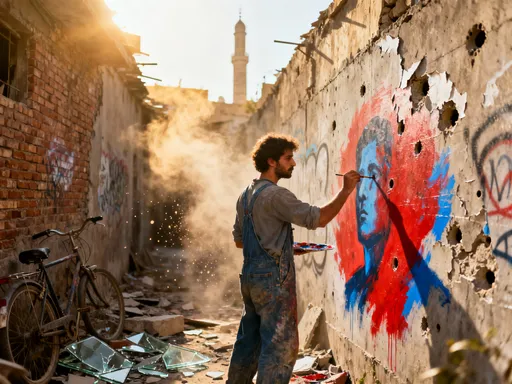
Walk through any central district of Beirut, and you’ll notice that the walls speak. Not literally, of course—but through vibrant murals, stenciled messages, and layered graffiti that tell stories of loss, resistance, and hope. Unlike decorative street art found in other global cities, Beirut’s outdoor works often carry political weight, historical references, or social critique. Each piece functions as a public archive, preserving memories that might otherwise be erased by time or official silence.
In neighborhoods like Ras Beirut and the area surrounding the American University, walls depict portraits of activists, poets, and everyday citizens who became symbols of resilience. Some murals commemorate specific events—such as the port explosion or past moments of civil unrest—while others offer abstract representations of longing, unity, or defiance. The imagery is often layered, with new paintings overlapping older ones, creating a visual timeline of the city’s shifting moods and concerns.
One common theme is the blending of personal and collective memory. A child’s drawing might be enlarged and painted beside a wartime photograph. A poem about displacement could be rendered in Arabic calligraphy across a concrete barrier. These works do not shout; they whisper, invite, provoke. They ask viewers to pause, reflect, and consider what has been lost—and what might still be reclaimed.
While some pieces are commissioned by cultural organizations, many appear spontaneously, created overnight by anonymous hands. This unpredictability adds to their power. You never know when you’ll turn a corner and come face-to-face with a towering image of a woman holding a key—symbolizing the Palestinian right of return—or a phoenix rising from flames, representing Beirut’s repeated rebirth. The lack of formal attribution doesn’t diminish their impact; if anything, it enhances it, suggesting that these voices belong to the city itself.
For visitors, engaging with street art requires a different kind of attention. It’s not about checking off famous landmarks but about developing a sensitivity to context. A mural may look striking from a distance, but its full meaning reveals itself only when you understand the history of the building it’s painted on, or the community that lives nearby. This depth of meaning transforms a simple walk into a journey through memory and identity.
From Ruins to Rebirth: Art After the Port Explosion
The August 2020 explosion at the Port of Beirut was not just a physical disaster—it was a psychological rupture. The blast wave traveled across the city, shattering windows, collapsing walls, and leaving behind a landscape of trauma. In the days that followed, as residents cleared debris and searched for loved ones, something remarkable began to happen: art reappeared, almost immediately, as a form of collective response.
Community-led initiatives sprang up across affected areas like Geitawi, Mina al-Hosn, and Jnah. Volunteers painted murals on damaged buildings, turning scars into symbols of solidarity. One widely recognized image—a simple red heart with cracks running through it—appeared on multiple walls, becoming an unofficial emblem of shared grief and determination. These works were not created by famous artists or funded by grants; they emerged organically, often within hours of the explosion, as people sought ways to process the unimaginable.
Temporary memorials also took shape. Shattered furniture, twisted metal, and broken glass were arranged into installations that stood as silent witnesses. In one instance, a child’s bicycle, bent beyond recognition, was mounted on a pedestal with a plaque that read only: “We remember.” These pieces didn’t offer answers—they simply bore witness. And in doing so, they created space for mourning, reflection, and eventually, healing.
Over time, these spontaneous acts evolved into more structured projects. Local organizations partnered with artists to launch mural campaigns, inviting residents to contribute ideas and even paint alongside professionals. The goal was not beautification for tourism, but restoration of dignity and voice. In neighborhoods where government aid was slow or absent, these artistic interventions became a form of grassroots recovery—visible proof that life, creativity, and community were still alive.
Today, walking through these areas, you can see how art has helped reshape the narrative. Where there was once only devastation, there are now colorful walls, restored facades, and renewed pride. The art doesn’t erase the pain—it honors it, integrates it, and transforms it into something enduring. In this way, Beirut’s response to tragedy has become a model for how creativity can serve as both medicine and memory.
Artist Studios You Can Actually Visit
One of the most rewarding ways to experience Beirut’s art scene is by stepping directly into the spaces where creation happens. Unlike in many cities where studios are closed off or accessible only by appointment, Beirut offers several opportunities for the public to engage with working artists in their natural environment. Open-studio events, cultural crawls, and community workshops make it possible to see brushes mid-stroke, hear paint being mixed, and talk with creators about their process and inspiration.
Organizations like Beit Beirut, housed in a preserved war-damaged building in the heart of the city, play a crucial role in bridging art and public life. While it functions partly as a museum and archive, it also hosts regular artist residencies and educational programs. Visitors can attend talks, participate in printmaking or photography workshops, and view exhibitions created in direct response to Beirut’s history. The space itself—part memorial, part creative hub—embodies the city’s dual commitment to remembering the past and imagining the future.
District-based art crawls have also gained popularity, particularly in Gemmayzeh and Mar Mikhael. Typically held once or twice a year, these events invite the public to follow a self-guided route through participating studios and pop-up galleries. Artists open their doors, share works-in-progress, and often offer small prints or handmade items for sale. The atmosphere is informal and welcoming, more like visiting friends than attending a formal exhibition. These crawls foster connection—not just between artist and viewer, but among neighbors and communities.
For families or those traveling with children, some studios offer family-friendly activities, such as collaborative mural painting or storytelling sessions using visual art. These programs emphasize creativity as a shared, intergenerational practice. They also reflect a broader cultural value in Beirut: that art is not reserved for elites or experts, but belongs to everyone. Whether you’re a seasoned collector or someone who hasn’t picked up a paintbrush since childhood, there’s a place for you in this ecosystem.
Navigating the Scene: A Practical Guide
Exploring Beirut’s underground art scene doesn’t require special credentials—but it does benefit from thoughtful preparation. The best experiences come not from rushing from one spot to the next, but from moving with curiosity, respect, and openness. Knowing when to go, how to get around, and how to interact with local spaces can make all the difference in creating a meaningful visit.
The ideal time to explore is during late afternoon or early evening, especially on weekends. Many studios and pop-up galleries open their doors between 4 p.m. and 8 p.m., aligning with the city’s social rhythm. Summer months offer longer daylight and frequent outdoor events, though spring and autumn provide milder temperatures and fewer crowds. If possible, plan your visit around cultural festivals such as Beirut Art Week or the Beirut Design Week, when the city becomes especially vibrant with temporary installations, talks, and performances.
Getting around is easiest on foot in central districts like Gemmayzeh, Mar Mikhael, and Ras Beirut, where most underground spaces are concentrated. The streets are narrow and best navigated by walking, allowing you to notice details you’d miss from a car. For longer distances, ride-hailing apps like Uber and Careem operate reliably and affordably. Public transportation exists but is limited in coverage and not always convenient for tourists. Taxis are available, but it’s wise to confirm the fare before starting your journey.
When visiting art spaces, a few etiquette guidelines go a long way. Always ask before taking photographs, especially of people or works-in-progress. Speak softly, as many studios are also living spaces. If refreshments are offered, accept graciously—it’s a sign of hospitality. And while many artists appreciate sincere interest, avoid pressing personal questions about trauma or politics unless the artist brings it up first. Respectful curiosity is welcomed; intrusive inquiry is not.
Language is another consideration. While Arabic is the primary language, English is widely spoken in artistic and cultural circles. Learning a few basic Arabic phrases—such as “shukran” (thank you) or “ismak/ayyeh?” (what’s your name?)—can deepen your interactions. Most importantly, approach each encounter with humility. You are a guest in a living, breathing creative community—one that has endured much and continues to rebuild through beauty.
To enrich your experience further, consider pairing your art walk with a stop at a neighborhood café known for supporting local creators. Places like Annahar Bookstore & Café or Tawlet in Mar Mikhael often display artwork, host poetry readings, or serve food made by community cooperatives. These spaces exemplify the interconnectedness of culture, cuisine, and creativity in Beirut—where every aspect of life feeds into the larger tapestry of expression.
Why Beirut’s Art Matters Beyond Aesthetics
At first glance, Beirut’s underground art scene might seem like a collection of beautiful images and inspiring stories. But to view it only through the lens of aesthetics is to miss its deeper significance. These works are not merely decorative—they are acts of preservation, resistance, and reclamation. In a country marked by fragmentation, where official narratives often obscure more than they reveal, art becomes one of the few spaces where truth can be spoken freely.
Each mural, installation, or performance carries the weight of memory. They remind citizens of who they are, where they’ve been, and what they’ve survived. In a society where history is often contested or erased, these artworks serve as unofficial archives—visual testimonies that cannot be easily deleted or rewritten. They honor the dead, amplify the voices of the marginalized, and challenge dominant power structures without firing a single shot.
Moreover, these spaces foster dialogue in a landscape where conversation is often polarized. A shared mural can become a neutral ground, a place where people from different backgrounds pause, reflect, and find common ground. An exhibition in a repurposed warehouse can spark conversations about urban renewal, social justice, or environmental responsibility. Art creates a language that transcends sectarian divides, offering a rare space for unity in diversity.
For visitors, engaging with this scene is not just about appreciation—it’s about participation in a quiet revolution. By bearing witness, asking thoughtful questions, and supporting local creators, you become part of a larger movement. You affirm that culture matters, that memory matters, that beauty born from struggle is among the most powerful forces in the world.
Beirut is not a broken city waiting to be fixed. It is a living canvas, constantly being redrawn by the hands of those who refuse to be silenced. Its underground art scene is not hidden because it fears exposure—it is hidden because it grows naturally, like wildflowers in cracked pavement. To discover it is to witness resilience in its purest form. And to leave unchanged is not an option. The art stays with you—like a whisper, like a heartbeat, like a promise that even in darkness, creation endures.