Lost in LA’s Hidden Worlds: Where Locals Really Play
You know that feeling when you’ve seen all the Hollywood signs and walked down Rodeo Drive, but something’s missing? I felt it too—until I stumbled upon LA’s secret theme pockets. These aren’t your typical tourist spots, but vibrant, quirky neighborhoods where culture, art, and flavor collide in the most unexpected ways. Think mini universes hiding in plain sight. This is the LA most visitors never find. A city often reduced to palm-lined highways and celebrity sightings reveals its true soul in quiet corners where creativity thrives, traditions evolve, and community pulses beneath the surface. To discover these places is not to escape the real Los Angeles—it is to finally arrive.
Beyond the Postcard: Rethinking Los Angeles
Los Angeles is frequently misunderstood. To many, it exists as a montage of sun-bleached billboards, red carpet premieres, and endless freeways humming with traffic. The image is pervasive, but it captures only a sliver of a far more complex and layered city. Beneath the glossy exterior lies a mosaic of neighborhoods, each with its own rhythm, history, and identity. These are not mere suburbs or residential zones—they are thematic worlds, distinct in character and rich in local life. To move beyond the postcard version of LA is to recognize that the city’s soul lives not in its icons, but in its neighborhoods.
What defines a “theme area” in Los Angeles is not just architecture or cuisine, but atmosphere—a blend of culture, creativity, and community that shapes daily life. These pockets offer authenticity not as a performance for visitors, but as a lived experience. In places like Leimert Park or the Arts District, art isn’t confined to museums; it’s on the walls, in the parks, and woven into the conversations at neighborhood cafes. The shift from tourist to explorer begins when one stops chasing checklists and starts following curiosity.
This transformation is not always immediate. For many, it begins with a moment of realization—perhaps sitting on a park bench in Echo Park, watching families feed ducks while a busker plays folk songs nearby, and suddenly understanding that this, too, is Los Angeles. It’s in these unplanned pauses that the city reveals its depth. The value of such experiences lies not in their photogenic quality, but in their emotional resonance. They invite connection, not consumption.
Exploring these offbeat zones doesn’t require abandoning the well-known landmarks altogether. Rather, it means balancing them with visits to places where life unfolds organically. The benefit is twofold: travelers gain a richer understanding of the city, and local communities feel seen and appreciated beyond their economic utility to tourism. In a world where destinations risk becoming homogenized by mass travel, seeking out LA’s hidden worlds is an act of mindful exploration—one that honors both place and people.
Echo Park & Silver Lake: The Hipster Heartbeat
If Los Angeles has a creative pulse, it beats strongest in Echo Park and Silver Lake. These adjacent neighborhoods, nestled in the hills just northeast of downtown, are often labeled “hipster,” but that term only scratches the surface. What defines them is not a fashion aesthetic, but a spirit of reinvention—a place where urban life is reimagined through art, sustainability, and independent enterprise. The centerpiece is Echo Park Lake, a serene body of water ringed by walking paths, swan-shaped paddle boats, and views of the downtown skyline. It’s a rare urban oasis where joggers, families, and solo readers coexist in quiet harmony.
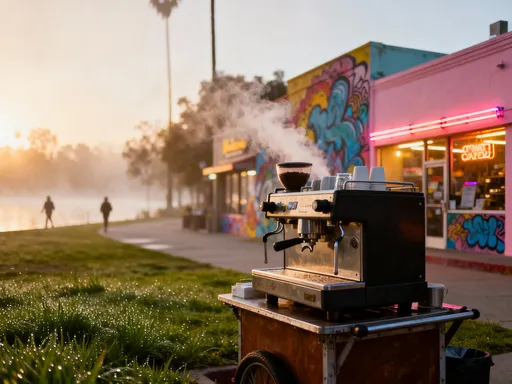
The coffee culture here is more than a trend—it’s a ritual. Shops like Trails End Café and Golden Chain serve as community anchors, where baristas know regulars by name and the scent of locally roasted beans mingles with the morning air. These cafes aren’t just places to grab a drink; they’re informal gathering spaces where ideas are exchanged and friendships formed. Nearby, the Music Box steps—a public staircase adorned with mosaic tiles—serve as both a functional pathway and a piece of living art, connecting Silver Lake Boulevard to residential streets above. It’s a small detail, but one that reflects the neighborhood’s ethos: beauty in the everyday.
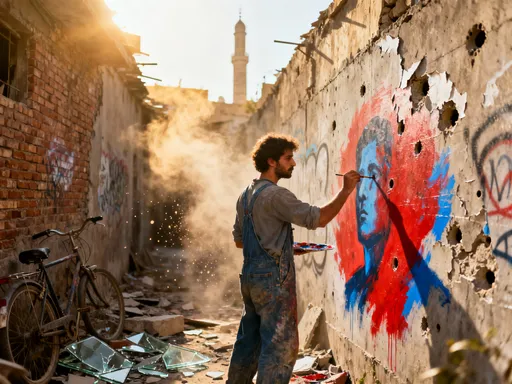
Street art flourishes in unexpected corners, especially behind Sunset Junction, where murals transform blank walls into vibrant storytelling canvases. These works are not commissioned by tourism boards but emerge from local artists and collectives, often addressing themes of identity, resistance, and hope. Some pieces change with the seasons, while others have become landmarks in their own right. Walking through these streets feels like flipping through a visual diary of the community’s evolving consciousness.
Yet, this creative energy exists alongside tensions. The same qualities that make Echo Park and Silver Lake appealing—walkability, charm, artistic vibrancy—have driven up housing costs and displaced long-time residents. Gentrification is a quiet undercurrent, reshaping the social fabric even as new restaurants and boutiques open. For visitors, the challenge is to engage respectfully—to enjoy the neighborhood without contributing to its erosion. This means supporting locally owned businesses, avoiding loud or intrusive behavior, and being mindful of residential spaces.
For the best experience, visit on a weekday morning when foot traffic is lighter. Parking can be tight, so consider biking or using ride-share services. Start with coffee at Trails End, take a slow loop around the lake, then wander the side streets toward Sunset Junction. Let yourself get slightly lost. That’s when you’re most likely to stumble upon a hidden mural, a pop-up flower stand, or a backyard gallery tucked behind a fence. The rhythm here is unhurried, and the reward is immersion.
Leimert Park: Soul of the City
Leimert Park stands as one of Los Angeles’ most significant cultural landmarks, though it remains under the radar for most tourists. As the historic heart of Black Los Angeles, it is a place where art, music, and community converge with profound depth. Unlike neighborhoods that have been reshaped by outside influences, Leimert Park has preserved its identity through decades of change, serving as a sanctuary for African American expression in a sprawling, often fragmented city. Its central plaza, with a circular fountain and open-air stage, functions as a living room for the community—a space for gathering, performing, and remembering.
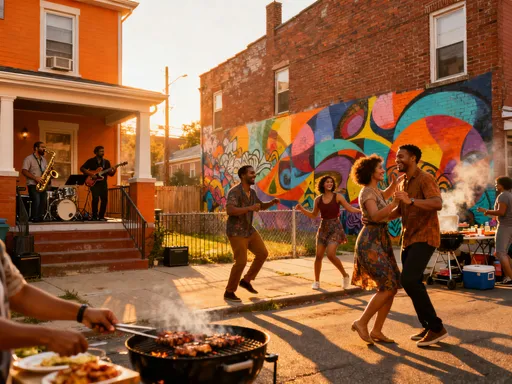
Every Sunday, the neighborhood comes alive with jazz. Local musicians gather at the plaza for informal jam sessions, drawing crowds of all ages who bring chairs, blankets, and picnic baskets. The music spills into nearby cafes and bookstores, creating a soundscape that feels both spontaneous and sacred. These gatherings are not performances for tourists; they are traditions rooted in celebration and resilience. Visitors are welcome, but the expectation is one of quiet respect—listening more than speaking, observing more than photographing.
The Vision Theater, a 1931 Art Deco building recently restored through community efforts, anchors the cultural landscape. It hosts film screenings, dance performances, and spoken word events that reflect the diversity of Black artistic voices. Nearby, family-run bookstores like Eso Won Books—once visited by President Barack Obama—offer curated selections of African American literature, history, and children’s books. These spaces are more than retail; they are acts of cultural preservation, ensuring that stories often marginalized in mainstream publishing remain visible and accessible.
Leimert Park’s significance extends beyond its current offerings. It was a hub during the Black Arts Movement of the 1960s and 1970s, a place where poets, musicians, and activists shaped a new vision for identity and empowerment. Today, that legacy lives on in the work of local artists and organizers who continue to use creativity as a tool for connection and change. The neighborhood does not present itself as a museum of the past, but as a dynamic, evolving community deeply aware of its roots.
For visitors, the best time to experience Leimert Park is on a weekend, especially Sunday afternoon. Approach with humility and a willingness to learn. Engage with vendors, attend an event if one is happening, and support local businesses. Dining options include soul food cafes and Caribbean restaurants offering flavorful, home-cooked meals. Avoid treating the neighborhood as an exotic curiosity. Instead, see it as a living testament to the power of culture to sustain and inspire.
Chinatown Reimagined: More Than Dim Sum
Los Angeles’ Chinatown is often reduced to its central plaza—a bustling, neon-lit courtyard filled with souvenir shops and well-known restaurants. While these spaces have their charm, they represent only one layer of a much more complex neighborhood. Beyond the tourist footpaths lie quieter streets where tradition and innovation coexist in surprising ways. This is a Chinatown that honors its heritage while embracing change, where family-run herbal shops stand blocks away from underground art collectives and fusion food trucks experimenting with bold new flavors.
One of the most exciting developments is the rise of creative spaces run by Asian American artists and entrepreneurs. Small galleries host rotating exhibitions that explore identity, migration, and belonging, often blending traditional motifs with contemporary media. Pop-up markets feature designers selling handcrafted jewelry, clothing, and home goods inspired by both Chinese and Californian aesthetics. These spaces are not designed for mass appeal; they thrive on intimacy and authenticity, drawing locals who value originality over spectacle.
The food scene, too, is evolving. While classic dim sum houses remain beloved, a new generation of chefs is redefining what Chinese cuisine means in LA. Taco trucks offering Chinese-Mexican fusion—like spicy Sichuan carnitas tacos or bao buns with chipotle aioli—reflect the city’s multicultural reality. These combinations are not gimmicks; they emerge from real neighborhood interactions, where culinary traditions blend naturally through shared spaces and generations of coexistence.
Even long-standing traditions take on new forms. Dragon dances still wind through the streets during Lunar New Year, but now they’re followed by pop-up design shops selling limited-edition apparel and accessories. The celebration remains rooted in culture, but it also embraces modern expression. This duality is what makes Chinatown so dynamic—it refuses to be frozen in time.
For a deeper experience, skip the weekend crowds and visit on a weekday evening. Begin at the eastern edge of the neighborhood, near Hill Street, where the pace slows and the architecture shifts. Walk past quiet temples, community centers, and corner markets. Stop at a fusion food truck for an inventive bite, then explore one of the smaller galleries or attend a poetry reading at a local arts space. End the night with tea at a traditional house or a craft cocktail at a speakeasy-style bar tucked behind an unmarked door. The goal is not to see everything, but to feel the neighborhood’s layered rhythm—one that honors the past while moving confidently into the future.
Heritage Square & Montecito Heights: A Step into Old LA
Just minutes from the urban intensity of downtown, Heritage Square Museum and the surrounding Montecito Heights neighborhood offer a striking contrast—a quiet retreat into Los Angeles’ 19th-century past. Nestled on a hillside overlooking the Arroyo Seco, this preserved collection of Victorian and East Coast-style homes transports visitors to a time before freeways and high-rises. The buildings, rescued from demolition and relocated here in the 1960s, form an open-air museum that feels more like a lived-in neighborhood than a curated exhibit. There are no crowds, no loudspeakers, just the creak of wooden floors and the rustle of leaves in the garden.
The atmosphere is nostalgic without being kitschy. Horse-drawn carriage rides are occasionally offered on weekends, and docents in period clothing share stories of early Los Angeles life—of gas lamps, horse-drawn trolleys, and the city’s transformation from a small pueblo to a modern metropolis. Children laugh as they peer into old-fashioned kitchens, while older visitors pause to admire hand-carved banisters and stained-glass windows. It’s a place that invites slowness, where one can sit on a porch swing and imagine life before smartphones and streaming.
Adjacent Montecito Heights extends the sense of quiet charm. Tree-lined streets wind past historic homes, many still owned by multi-generational families. The neighborhood feels insulated from the rush of the city, yet it’s deeply connected to it. The nearby Southwest Museum, though currently closed for redevelopment, once housed one of the largest collections of Native American artifacts in the region. Its legacy is complicated—marked by both cultural preservation and the colonial practices of early 20th-century collecting—but it remains a reminder of the diverse histories that shape LA.
For visitors seeking a peaceful morning escape, Heritage Square is ideal. Arrive early with coffee from a local vendor or food truck often stationed near the entrance. Walk through the gardens, explore the interiors of the homes, and take photos without filters or crowds. There’s a particular beauty in the imperfections—the chipped paint, the uneven floors, the way sunlight slants through old windows. These details don’t detract from the experience; they enhance it, offering a sense of authenticity that polished attractions often lack.
The area is also a favorite among local photographers, historians, and writers looking for inspiration. Benches are scattered throughout, perfect for journaling or simply sitting in silence. While it may not offer the excitement of a theme park or the glamour of a celebrity home tour, Heritage Square provides something rarer: stillness. In a city that rarely pauses, this corner of LA offers a chance to breathe, reflect, and remember that history is not just something to study—it’s something to feel.
The Arts District: From Factories to Galleries
The Arts District in downtown Los Angeles is a testament to urban transformation. Once a cluster of abandoned warehouses and industrial buildings, it has evolved into one of the city’s most dynamic creative hubs. This metamorphosis didn’t happen overnight, nor was it driven solely by developers. Artists, drawn by low rents and large studio spaces, began occupying these buildings in the 1970s and 1980s, laying the foundation for a cultural renaissance. Today, the neighborhood balances its gritty origins with a growing reputation for innovation, design, and culinary excellence.
What makes the Arts District compelling is its layered identity. On one hand, it’s home to internationally recognized galleries, craft breweries, and courtyard cafes frequented by designers, writers, and entrepreneurs. On the other, tucked behind unmarked doors and up narrow stairwells, are artist lofts where painters, sculptors, and performance artists work in relative obscurity. This duality creates a rich tension—between the trendy and the underground, the polished and the raw. For visitors, the challenge is to see beyond the Instagrammable facades and discover the creative engine that still powers the neighborhood.
Walking tours often focus on the main drag along 3rd and 4th Streets, but the real discoveries lie in the alleys and side blocks. Murals cover entire building sides, some commissioned, others spontaneous. Studios occasionally open their doors during monthly art walks, offering a rare glimpse into working spaces where ideas take shape. Independent boutiques sell handmade ceramics, vintage clothing, and limited-edition prints, often created by the shop owners themselves. These are not souvenir stands; they are extensions of personal artistic practice.
The food and drink scene reflects the same ethos. While high-end restaurants attract diners from across the city, smaller spots—like a coffee cart inside a converted garage or a wine bar in a former metal shop—offer more intimate experiences. These places prioritize quality and atmosphere over scale, often run by couples or small teams who live nearby. Sitting at a communal table, sipping a pour-over coffee under exposed beams, one begins to understand the neighborhood’s appeal: it feels authentic, not manufactured.
To avoid weekend crowds and experience the Arts District like a local, visit on a Tuesday or Wednesday morning. Start with coffee at a neighborhood roaster, then wander at random, letting curiosity guide you. Stop into open studios, chat with shop owners, and take time to appreciate the architectural details—the brick walls, iron beams, and skylights that define the space. This is not a place to rush through, but to linger in. The reward is not a checklist of sights, but a sense of having touched something real—a community built on creativity, resilience, and the belief that even forgotten spaces can be reborn.
Why These Places Matter: Travel That Feels Real
Exploring Los Angeles through its hidden theme pockets does more than broaden a traveler’s itinerary—it deepens the entire experience of the city. These neighborhoods matter because they represent a different kind of tourism, one rooted in connection rather than consumption. They remind us that travel is not just about seeing landmarks, but about feeling a place, understanding its rhythms, and recognizing the people who give it life. In a world where destinations risk becoming interchangeable, these corners of LA remain distinct, authentic, and alive.
Off-the-beaten-path does not mean inconvenient or inaccessible. On the contrary, many of these places are well-connected by public transit or short rides from central areas. What they require is not extra time or money, but intention. They ask travelers to slow down, to look closely, and to engage with curiosity rather than expectation. This kind of travel is not passive; it is participatory. It means choosing a family-run bookstore over a chain, listening to live jazz instead of a recorded playlist, or ordering a fusion taco from a vendor who speaks proudly of his heritage.
These experiences foster empathy. They reveal that cities are not monoliths, but collections of stories—some celebrated, others quietly unfolding. In Leimert Park, that story is one of cultural resilience. In the Arts District, it’s about reinvention. In Heritage Square, it’s memory. Each place offers a different lens, and together, they form a fuller picture of Los Angeles—one that is messy, beautiful, and constantly evolving.
For the 30- to 55-year-old traveler—often balancing family, work, and personal curiosity—this kind of journey offers something invaluable: meaning. It’s not about collecting photos or checking off attractions, but about returning home with a deeper sense of connection. It’s about telling your children not just that you saw the Hollywood sign, but that you heard jazz in a sunlit plaza, watched artists at work in a converted warehouse, and tasted a taco that tasted like two cultures becoming one.
Los Angeles is not one city. It is many worlds, each with its own heartbeat, history, and horizon. To wander through them is to rediscover the joy of exploration—not as a checklist, but as a conversation. So the next time you find yourself in LA, look beyond the postcard. Step into the neighborhoods where locals live, create, and gather. Let yourself get lost. Because sometimes, that’s exactly how you find what you didn’t know you were looking for.