Soul of the City: Havana Through Still Moments
Havana isn’t a place you rush through—it’s one you feel, slowly. I wandered its cracked streets not with an itinerary, but with intention, letting faded colonial walls, vintage cars, and salsa rhythms guide me. This isn’t about ticking off landmarks; it’s about the in-between glances: a grandmother waving from her balcony, sunlight slicing through cigar smoke. Slow travel here transforms sightseeing into soul-seeing, where every pause reveals a deeper truth. In a world that prizes speed, Havana teaches the quiet power of presence—of standing still long enough for a city to whisper its stories. This is not a guide to seeing more, but to feeling deeper.
The Rhythm of Arrival: Slowing Down in a City That Moves to Its Own Beat
Stepping off the plane into Havana’s warm, humid air is like entering a different dimension of time. The airport shuttle, painted in faded pastels, rolls toward the city with a rhythm that defies urgency. Horns blare, yes, but they do not signal anger—they pulse like percussion in a never-ending street symphony. The buildings lean slightly, their paint blistered by salt and sun, yet each one seems to sigh with character rather than decay. In those first 24 hours, the most important decision a traveler can make is not where to go, but how to be: present, patient, and open.
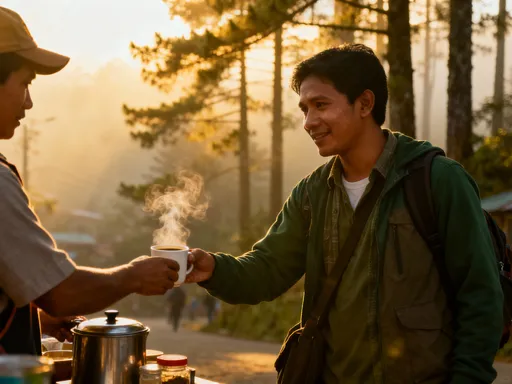
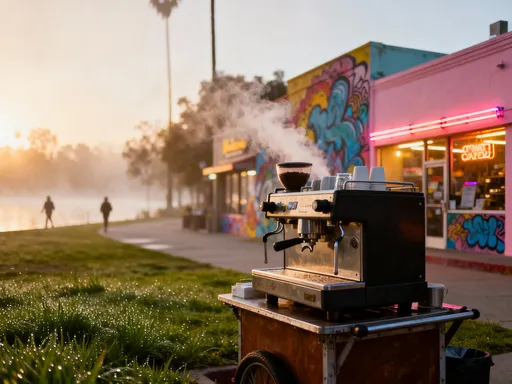
Tourist guides often list “must-see” spots—Revolution Square, the National Capitol, the Museum of the Revolution—but arriving with a checklist risks missing the essence of Havana. The city does not reward speed. It rewards stillness. The first morning, instead of rushing to a landmark, sit on a bench in Parque Central. Order a café cubano from a street vendor—small, strong, sweetened with sugar—and let the scene unfold. Watch men gather around folding tables, slapping dominoes down with practiced flair. Listen to the laughter that erupts after a clever move. Smell the sharp tang of cigar smoke curling from an older man’s hand-rolled cigar. These are not side details; they are the heartbeat of the city.
The shift from tourist to observer begins with surrender. Let go of the need to document every moment. Instead, allow your senses to lead. The why is simple: Havana’s soul is not found in polished brochures but in its lived-in corners. The city’s rhythm is not hurried; it is layered, complex, shaped by decades of resilience and creativity. By slowing down, you align yourself with that rhythm. You stop consuming the city and begin conversing with it. The how is equally simple: arrive without a schedule. Wander without GPS. Let a melody from an open window or the scent of frying plantains pull you down an unplanned alley. This is where discovery begins—not on a map, but in a moment.
Old Havana’s Hidden Layers: Beyond the Postcard Facades
Old Havana dazzles with its restored plazas—Plaza Vieja with its pastel buildings and lively cafés, El Capitolio rising like a Cuban echo of Washington’s dome. These are beautiful, yes, but they represent only one layer of the city’s identity. To see Havana fully is to look beyond the postcard. It is to notice the peeling stucco beside a freshly painted door, the rusted iron balcony where a potted geranium struggles to bloom, the children chasing a deflated ball through a shadowed passageway. These are the details that tell the real story—not of perfection, but of endurance.
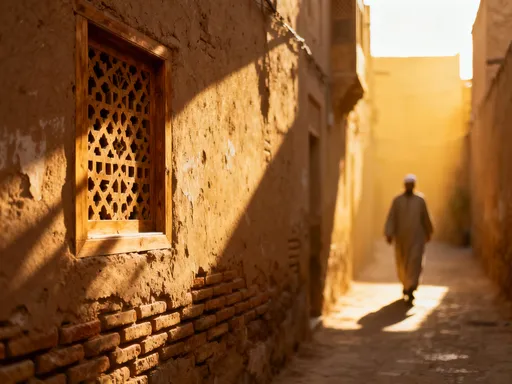
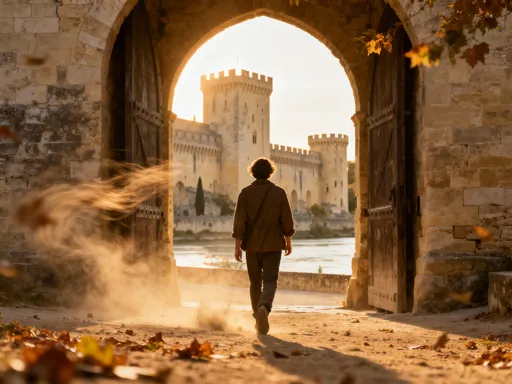
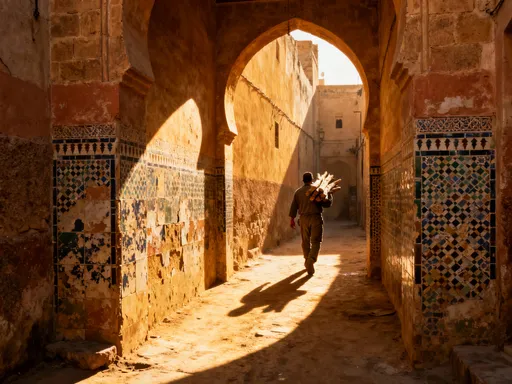
One morning, I turned away from the crowds at Plaza de Armas and slipped into a narrow alley barely wide enough for two people to pass. At the end was a courtyard, hidden from the street by a crumbling archway. Inside, a small café served coffee on mismatched chairs under a grapevine. An elderly woman swept the stone floor while a cat napped in a sunbeam. No signs advertised the place. No tour groups arrived. Yet it was one of the most alive spots I’d seen. This is the power of slow viewing: it reveals what is not marketed, not promoted, but simply lived.
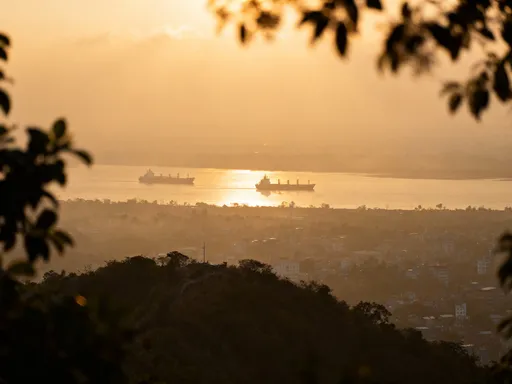
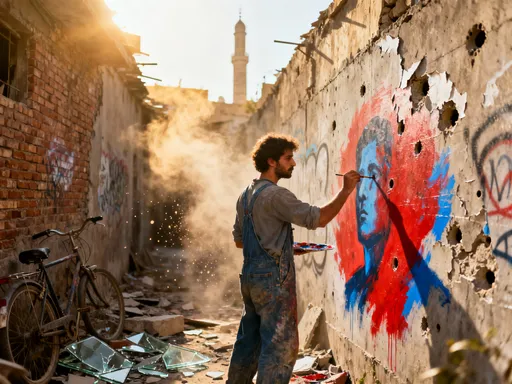
Another discovery was a local art studio tucked behind a broken gate in Centro Habana. The door was ajar, and from within came the sound of brush on canvas. Inside, a young painter worked on a vibrant mural depicting daily life—women carrying water, musicians in doorways, a boy flying a kite from a rooftop. He welcomed me without surprise, as if strangers arriving through broken gates were ordinary. His studio was not on any official art walk, but it pulsed with authenticity. Similarly, a quiet stretch of the Malecón at sunset—away from the crowds near Fortaleza de San Carlos de la Cabaña—offers a different kind of beauty. Here, the waves crash against the seawall, the light turns amber, and fishermen cast their lines with quiet determination. No one takes selfies. No one hurries. The city breathes.
The why behind seeking these unpolished spaces is rooted in truth. Perfection can be staged; authenticity cannot. Havana’s charm lies not in its restoration but in its rawness—the way life persists despite scarcity, neglect, and time. The how is straightforward: walk without destination. Let curiosity, not navigation apps, guide your steps. Turn down alleys that look forgotten. Pause when something catches your eye—a pattern of light, a fragment of music, a door left ajar. These are not detours; they are invitations.
Living Architecture: When Buildings Tell Stories
In Havana, buildings are not just structures—they are storytellers. Each façade, each staircase, each rusted gate holds a chapter of history. Walk through Vedado or Centro Habana, and you’ll see grand homes from the 1920s and 30s, their columns still elegant, their windows framed in wrought iron, even as paint peels and roofs sag. These were once homes of the elite, symbols of Cuba’s pre-revolutionary prosperity. Today, many house multiple families, their grand halls divided into tiny apartments. Laundry hangs from balconies where chandeliers once sparkled. Yet, there is no shame in this transformation—it is a testament to adaptation, to survival.
One building near Callejón de Hamel stood out not for its beauty but for its layers. The ground floor was a small music school, where children practiced conga rhythms on donated drums. The second floor had a mural of Yoruba deities, a tribute to Afro-Cuban heritage. Above it, a balcony held potted plants and a rocking chair where an elderly woman watched the street. The building was cracked, the paint faded, but it was alive in a way that pristine museums are not. It was not preserved; it was used. And in that use, it told a richer story.
Another example: a staircase in Old Havana, carved from Cuban marble, now chipped and uneven from decades of footsteps. At the top, a single flower had been placed in a crack, left by someone as a quiet offering. Who left it? A lover? A mourner? A child playing? We will never know. But the gesture—small, fleeting—spoke volumes. Architecture in Havana is not frozen in time; it is part of time. It bears the marks of life, not as damage, but as dignity.
The why of looking closely at buildings is to understand resilience. These structures have weathered hurricanes, embargoes, and decades of economic hardship. Yet they stand, not as ruins, but as homes. The how is simple: look up. In a world trained to look at screens, the act of raising your eyes to a balcony, a cornice, a shutter is revolutionary. Take time. Study the details. If a local is nearby, ask—gently, respectfully—about the building’s history. You may not get a full answer, but you may get a smile, a shrug, a story passed down through generations. In those moments, architecture becomes memory.
The Human Canvas: Portraits in Motion and Stillness
If Havana’s buildings are storytellers, its people are poets. They do not perform for tourists; they live. And in that living, they create moments of unexpected beauty. One afternoon, I sat on a bench in Parque de la Fraternidad and did nothing. No phone, no book, no agenda. I simply watched. A tailor worked at a window two stories above, his sewing machine clicking like a metronome. Across the street, two teenagers rehearsed salsa steps, laughing when one stepped on the other’s foot. An older couple shared a single ice cream, passing the cone back and forth.
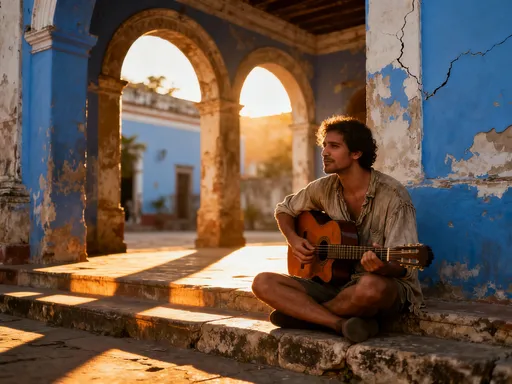
Then, in a doorway across the plaza, an elderly man sat with a guitar. He played softly, his fingers moving with quiet mastery. No crowd gathered. No one recorded him. But the music wove through the air like thread, connecting the space between buildings, between people. I later learned he came every afternoon, not for money, but because the light was good and the breeze came from the right direction. That moment—unnoticed by most, unforgettable to me—was the heart of Havana.
Another morning, near the corner of San Miguel and Zulueta, I saw a woman hanging laundry on a line strung between buildings. Her movements were rhythmic, almost dance-like. A child ran up, handed her a folded shirt, and she smiled without stopping. The clothes fluttered in the wind—bright colors against the faded walls. It was not staged. It was not for visitors. It was life, unfolding.
The why of observing people is connection. In a society where material wealth is limited, human presence becomes the true currency. A smile, a shared glance, a moment of mutual recognition—these are the exchanges that matter. The how is to linger. Sit. Stay longer than feels natural. Make eye contact with kindness, not intrusion. Carry a small notebook, not to write extensively, but to capture a phrase, a detail, a feeling. These notes are not for publication; they are for remembrance. They help you carry the moment home.
Time and Light: Chasing Moments, Not Sunsets
Many travelers come to Havana for the sunsets—the golden hour when the sky blazes over the Malecón. And yes, they are beautiful. But beauty is not only in the grand spectacle; it is also in the quiet shifts of light throughout the day. At 3 PM, when the sun slants across the cobblestones of Calle Obispo, the shadows stretch long and thin, turning the street into a study of contrasts. At 6 AM, the first light catches the dew on a wrought-iron gate, making it sparkle like lace.
I returned to the same corner of Plaza de la Catedral three times in one day—morning, afternoon, evening—just to see how the light changed. In the morning, the square was cool, the light soft, the cathedral’s baroque façade glowing gently. By noon, the sun beat down, turning the stones white-hot, the shadows sharp. In the evening, the light turned amber, wrapping the buildings in warmth, softening their edges. The same place, three different moods. No camera could fully capture it. But being there—still, watching—did.
The why of noticing light is that it shapes emotion. It alters how we feel in a space, how we remember it. A place seen in harsh noon light feels different from the same place bathed in twilight. Light reveals texture, depth, mood. It turns architecture into atmosphere. The how is to visit the same spot at different times. Resist the urge to move on. Let the hours pass. Bring a notebook, a sketchpad, or simply your attention. Observe how the color of a wall changes, how shadows grow and shrink, how people move differently as the light shifts. This is not photography; it is presence.
The Art of Lingering: Cafés, Benches, and Breathing Space
Slow travel requires pauses. Without them, even the most beautiful city becomes a blur. In Havana, the art of lingering is not a luxury—it is a necessity. One morning, I sat at a small café on Calle 23 in Vedado, ordered a coffee, and stayed for two hours. No one rushed me. The waiter brought my cup, smiled, and left me alone. Around me, locals read newspapers, argued about baseball, sipped their drinks slowly. A woman fed crumbs to pigeons. A man played a game of solitaire with a deck of worn cards. Time moved differently here—not slowly, but fully.
Another afternoon, I found a bench in Parque Maceo, shaded by a ceiba tree. I did nothing. No photos. No notes. Just sat. Watched. Breathed. A family played dominoes nearby. Children chased each other around a fountain. An old man fed bread to ducks. The air smelled of earth and jasmine. In that stillness, my awareness sharpened. I noticed the pattern of leaves against the sky, the rhythm of distant music, the way light dappled the ground. These were not extraordinary moments—just ordinary ones, seen clearly.
The why of pausing is awareness. When we stop, the world comes into focus. Details emerge. Emotions settle. We begin to see not just with our eyes, but with our whole being. The how is simple: choose seating over standing. Stay longer than expected. Embrace “doing nothing” not as laziness, but as part of the journey. Let the city wash over you. These moments of stillness are not empty—they are full. They are where memory is made.
Carrying Havana Home: The Lasting Gaze
When I left Havana, I did not bring back many souvenirs. No t-shirts, no keychains, no mass-produced art. What I carried were images: the way sunlight fell on a child’s face as she laughed on a doorstep, the pattern of shadows on a courtyard wall at dusk, the quiet smile of a woman who handed me a slice of mango from her lunch. These are the moments that endure—not because they were perfect, but because they were real.
Slow viewing changes you. It trains you to look deeper, to listen more closely, to stay present. It teaches that beauty is not always polished, that connection does not require words, that time is not something to be filled, but to be lived. Havana does not give itself to the hurried. It reveals itself only to those who are willing to stand still, to wait, to watch.
The why of this way of traveling is lasting connection. When you see deeply, you remember differently. You don’t recall a checklist of places; you recall feelings, textures, glances. You carry the city within you, not as a memory, but as a presence. The how is to revisit those moments mindfully—when you’re drinking coffee at home, let yourself remember the taste of café cubano; when you hear music, think of the man on the doorstep with his guitar. Let Havana live in your quiet moments.
Travel is not about how far you go, but how deeply you see. In Havana, the soul of the city is not in its monuments, but in its stillness—in the spaces between sound, between movement, between breath. To find it, you don’t need a map. You need only your eyes, your heart, and the courage to pause. So go—not to collect sights, but to collect moments. Travel not with speed, but with stillness. And let the city, in its quiet way, change you forever.