You Won’t Believe What Happens at Ras Al Khaimah’s Hidden Festivals
If you think the UAE is just skyscrapers and shopping malls, think again. Tucked between desert dunes and rugged mountains, Ras Al Khaimah hosts vibrant, under-the-radar festivals that few tourists know about. I experienced soul-stirring traditional music, tasted authentic Emirati flavors, and joined locals in celebrations rooted in centuries-old heritage. This is travel at its most real—raw, warm, and unforgettable. Let me take you inside the magic.
Discovering Ras Al Khaimah Beyond the Brochures
Ras Al Khaimah, often overshadowed by its flashier neighbors like Dubai and Abu Dhabi, reveals a quieter, more grounded side of the United Arab Emirates. Stretching from the jagged peaks of the Hajar Mountains to the sun-kissed shores of the Arabian Gulf, this emirate offers a landscape rich in natural contrast and cultural depth. The mountain trails near Jebel Jais, the country’s highest peak, wind through ancient terraced farms and desert wadis, while coastal villages preserve fishing traditions passed down through generations. It is in these spaces—between the sand and sea, the past and present—that Ras Al Khaimah’s true character emerges.
What makes this emirate a hidden gem for cultural travelers is its commitment to authenticity over spectacle. While other destinations have leaned heavily into luxury tourism and global branding, Ras Al Khaimah has chosen a different path—one that values heritage, community, and sustainable engagement. This is not a place built for mass tourism; it’s a place built for meaningful connection. Its festivals, many of which remain off official tourist itineraries, are intimate gatherings where visitors are not spectators but participants. These events offer a rare opportunity to step beyond curated performances and into lived traditions.
For those seeking more than photo ops and souvenir shopping, Ras Al Khaimah’s niche festival experiences provide a deeper understanding of Emirati life. Unlike the large-scale commercial festivals found elsewhere in the Gulf, these celebrations are rooted in seasonal rhythms, local customs, and intergenerational knowledge. Whether it’s a date harvest festival in a mountain village or a maritime event honoring traditional dhow building, each occasion reflects a living culture rather than a staged recreation. Travelers who attend these gatherings often describe a sense of being welcomed into something genuine—a world where hospitality is not a service but a way of life.
The Soul of the Season: Al Dhafra Festival & Cultural Celebrations
Among the most immersive cultural experiences in the region is the Al Dhafra Festival, an annual celebration that, while centered in Abu Dhabi, has inspired similar events across the UAE, including in Ras Al Khaimah. These gatherings are not mere tourist attractions; they are affirmations of identity, where Emirati traditions are not only preserved but actively practiced. In Ras Al Khaimah’s version of such festivals, visitors encounter the heart of the nation’s heritage through activities that have shaped desert life for centuries.
One of the most captivating highlights is the camel beauty contest, a time-honored tradition that reflects the deep bond between Bedouin communities and their animals. Camels are judged not by speed or strength but by physical grace—long necks, thick eyelashes, and dignified posture. These events are more than entertainment; they honor the camel’s historical role as a means of transport, a source of milk, and a symbol of endurance in the harsh desert climate. Watching a proud owner gently groom his animal before the judges’ eyes offers a glimpse into a relationship built on care, patience, and mutual respect.
Falconry displays are another cornerstone of these cultural festivals. As one of the oldest hunting traditions in the Arabian Peninsula, falconry is recognized by UNESCO as an intangible cultural heritage. In Ras Al Khaimah, trained falcons are presented with reverence, their keen eyes and silent flight drawing murmurs of admiration from onlookers. Handlers explain the intricate training process, the special diets, and the deep emotional connection between bird and human. These demonstrations are not only visually striking but also serve as living classrooms, teaching younger generations—and curious visitors—about a practice that once sustained life in the desert.
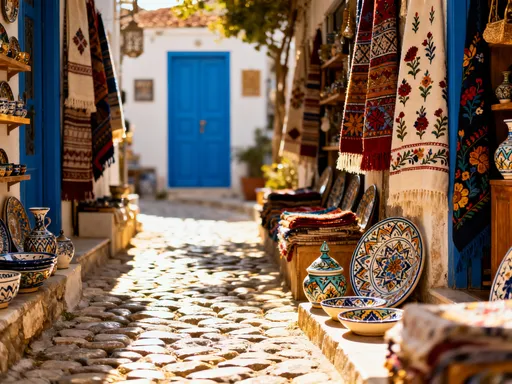
Equally compelling are the handcraft markets, where artisans demonstrate traditional skills such as Sadu weaving, palm frond basketry, and incense blending. Women in vibrant abayas sit at looms, their fingers moving swiftly to create geometric patterns that tell stories of tribal affiliation and regional identity. Nearby, elders teach children how to weave date palm leaves into functional items like mats and fans—a skill that was once essential for daily life. These markets are not just places to buy souvenirs; they are spaces of transmission, where knowledge is shared, preserved, and celebrated.
A Taste of Tradition: Festival Food That Tells a Story
No cultural celebration in Ras Al Khaimah is complete without food—and not just any food, but dishes that carry the weight of history and the warmth of family. At local festivals, the air fills with the scent of slow-cooked spices, grilled meats, and sweet, syrup-drenched pastries. These are not fusion creations or modern reinterpretations; they are ancestral recipes, carefully prepared and proudly served. Each bite offers a direct link to the land, the climate, and the people who have thrived here for generations.
Among the most beloved treats is luqaimat, golden dumplings fried to perfection and drizzled with date honey or saffron syrup. Often served on small silver trays, these bite-sized delights are a staple at weddings, religious holidays, and seasonal festivals. Their name means “small bites” in Arabic, and they are typically shared communally, passed from hand to hand as a gesture of generosity. Eating them warm, straight from the oil, is a sensory experience—crispy on the outside, soft within, and rich with the flavor of tradition.
Another centerpiece of festival meals is machboos, a fragrant rice dish cooked with meat—usually chicken, lamb, or fish—and spiced with black lime, saffron, and cardamom. In coastal areas of Ras Al Khaimah, fish machboos is especially popular, reflecting the emirate’s long-standing relationship with the sea. The dish is traditionally cooked in large pots over open fires, allowing the flavors to deepen over hours. Families gather around as it is served on shared platters, eating with their right hands in accordance with custom. This act of communal dining is not just about sustenance; it is a ritual of unity and gratitude.
Equally significant is the presence of camel milk and its derivatives. Once a vital source of nutrition for desert nomads, camel milk is now celebrated as a nutritious, sustainable alternative to cow’s milk. At festivals, it is served plain, as yogurt, or even in ice cream. Some vendors offer camel milk chai, a creamy, spiced tea that warms the body and spirit. These offerings are more than culinary novelties; they are reminders of how Emirati communities have adapted to their environment, turning scarcity into sustenance through ingenuity and resilience.
For visitors, navigating these food experiences with respect is essential. It is customary to accept food when offered—it is considered impolite to refuse. Eating with the right hand (the left is traditionally seen as unclean) and waiting for elders to begin first are small gestures that show appreciation. Asking about ingredients or preparation methods is welcomed, as locals are often eager to share their knowledge. By approaching festival food with curiosity and courtesy, travelers become part of the story rather than mere observers.
Rhythm of the Desert: Music, Dance, and Nighttime Magic
As the sun dips below the dunes, another dimension of Ras Al Khaimah’s festivals comes alive—the rhythm of traditional music and dance. The evening air pulses with the beat of drums, the chant of poetry, and the synchronized movements of performers whose steps echo centuries of tribal history. These are not performances for entertainment alone; they are expressions of identity, resilience, and communal pride. To witness them is to feel the heartbeat of Emirati culture.
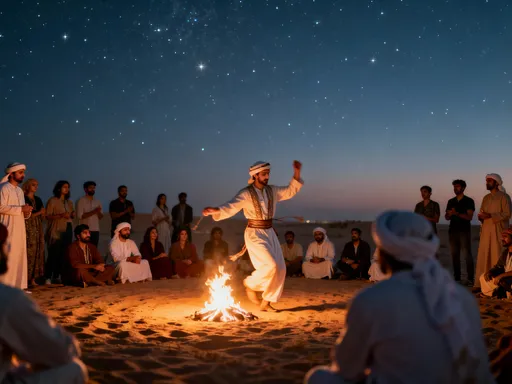
One of the most powerful performances is the Al Ayyala dance, recognized by UNESCO as part of the intangible cultural heritage of humanity. Groups of men, often dressed in white thobes and red-checkered ghutras, stand in two lines facing each other, swaying rhythmically while holding bamboo sticks or swords. As the drumming intensifies, they move forward and back in perfect unison, chanting poetic verses that speak of honor, bravery, and unity. The dance is both martial and ceremonial, reflecting the historical role of tribes in defending their lands and maintaining social cohesion. Watching an Al Ayyala performance under a starlit sky is a humbling experience—one that transcends language and connects viewer to tradition.
Drum circles, often led by elderly musicians, provide the pulse of the festival nights. The tabl, a large double-headed drum, sets the tempo, while smaller drums and clapping hands add layers of rhythm. These gatherings are participatory by nature; visitors are often invited to sit in the circle, clap along, or even try their hand at the drum. There is no pressure to perform perfectly—only an invitation to join in the joy. The music, passed down orally through generations, carries stories of migration, celebration, and survival.
Equally moving are the recitations of Bedouin poetry, known as nabati. Performed in colloquial Arabic, these poems explore themes of love, loss, nature, and tribal loyalty. Poets, often elderly men with deep, resonant voices, deliver their verses with dramatic pauses and expressive gestures. The audience listens in respectful silence, erupting in applause at the end of each piece. These moments are not just artistic displays; they are acts of cultural preservation, ensuring that the oral traditions of the desert remain alive.
For many visitors, being welcomed into these nighttime celebrations is the most unforgettable part of the journey. There is a palpable sense of inclusion—children dance freely, elders smile from woven mats, and strangers are offered tea and dates. The atmosphere is one of warmth and generosity, where the boundaries between host and guest begin to blur. In these moments, travel becomes something deeper: a mutual exchange of respect, curiosity, and human connection.
Off-the-Beaten-Path Moments: Finding Intimacy in Small Gatherings
While large festivals have their place, the true magic of Ras Al Khaimah often lies in the smaller, lesser-known events that fly under the radar of mainstream tourism. These village-level celebrations—whether a date harvest festival in Dhayah, a fishing heritage day in Rams, or a seasonal camel milking event—are not designed for mass attendance. They are community affairs, organized by locals for locals, with space for curious travelers who approach with humility.
One such experience might begin with an invitation from a local family to attend a private gathering during the date harvest season. In the early morning light, men climb tall palm trees to collect the ripe fruit, while women sort and prepare them on woven mats below. Visitors are taught how to distinguish between varieties—Khalas, Fardh, and Khunaizi—each with its own texture and sweetness. The day ends with a shared meal, stories told in broken English and warm gestures, and the gift of a small bag of dates as a token of hospitality.
Another intimate moment might occur at a coastal dhow festival, where master shipbuilders demonstrate the ancient art of constructing wooden sailing vessels without nails or blueprints. Using hand tools and techniques passed down for generations, they shape planks of imported teak into sleek, seaworthy dhows. Children watch intently, some already learning the craft from their fathers. These events are not commercialized; they are acts of cultural continuity, ensuring that a vital part of Emirati maritime history does not fade into memory.
What defines these small gatherings is their authenticity. There are no stage lights, no ticket booths, no souvenir stalls. Instead, there is conversation, shared labor, and the quiet pride of preserving a way of life. For travelers, these moments offer a rare chance to slow down, listen, and be present. They remind us that the most meaningful travel experiences are not always the most advertised—they are the ones that happen when we step off the beaten path and into the rhythm of daily life.
Planning Your Visit: Timing, Access, and Local Etiquette
To experience Ras Al Khaimah’s hidden festivals, timing is essential. The best period to visit is during the cooler months, from November to March, when temperatures are mild and outdoor events are at their peak. This season coincides with several key cultural moments, including the UAE’s National Day in December, the Islamic month of Ramadan (with its unique evening festivities), and the spring harvest celebrations. Planning a trip around these times increases the chances of encountering authentic local events.
Access to these festivals is generally straightforward, though they are not always listed on major tourism websites. The most reliable way to stay informed is through local visitor centers, community bulletin boards, and social media groups run by Emirati cultural organizations. Some hotels in Ras Al Khaimah also partner with local guides who can provide up-to-date information on upcoming events. Travelers are encouraged to ask questions politely and express genuine interest—locals are often happy to share details with those who show respect for their traditions.
When attending these gatherings, observing local etiquette is crucial. Dress modestly: women should wear loose-fitting clothing that covers shoulders and knees, and men should avoid sleeveless shirts. While Western attire is accepted, dressing conservatively shows respect for cultural norms. Photography is generally allowed, but it is important to ask permission before taking pictures of people, especially women and children. During religious observances or prayer times, visitors should be mindful of noise and movement.
Transportation within Ras Al Khaimah is manageable by car, as the emirate is compact and well-connected by modern roads. Public transport is limited, so renting a vehicle or hiring a local driver offers the most flexibility. For those staying in urban centers like Al Hamra or the city of Ras Al Khaimah, many festivals are within a 30- to 60-minute drive. Arriving early is advisable, as parking can be limited at popular events, and seating is often first-come, first-served.
Why These Festivals Matter: Preserving Culture in a Modern World
In an era of rapid urbanization and globalized culture, the festivals of Ras Al Khaimah serve as vital anchors of identity. They are not static relics of the past but dynamic expressions of a living heritage. Through music, food, craft, and communal celebration, Emirati communities reaffirm their values, strengthen intergenerational bonds, and welcome the world into their story. These events are acts of preservation—not through museums or textbooks, but through participation and memory.
Responsible tourism plays a crucial role in supporting this cultural continuity. When travelers attend these festivals with respect and curiosity, they contribute to the economic and social sustainability of local communities. Revenue from food stalls, handicraft sales, and guided experiences helps fund cultural programs and encourages youth to remain engaged with their heritage. Moreover, the presence of respectful visitors sends a message: that these traditions matter, that they are valued beyond borders.
For the traveler, the reward is equally profound. To move beyond the surface of a destination—to taste its food, learn its rhythms, and share in its celebrations—is to travel with purpose. It is to exchange the fleeting thrill of sightseeing for the lasting warmth of human connection. In Ras Al Khaimah’s hidden festivals, we find not just entertainment, but meaning. We are reminded that culture is not something to be consumed, but something to be honored, protected, and passed on.
So if you’re ready to see the UAE in a new light—if you’re ready to trade polished plazas for desert drums, shopping bags for handwoven baskets—then Ras Al Khaimah awaits. Come not as a spectator, but as a guest. Come with open hands and an open heart. And let the magic of its hidden festivals transform the way you think about travel forever.