Check-In at Avignon: Where History Lives in Every Stone
Stepping into Avignon feels like walking through a living museum—centuries whisper from the ramparts, the Rhône breeze carries echoes of papal decrees, and every cobblestone square hums with artistic soul. I came for the check-in, but stayed for the culture. From the towering Palais des Papes to hidden chapels adorned with frescoes, Avignon isn’t just a destination; it’s a dialogue with the past. This is more than sightseeing—it’s immersion. A city where history isn’t preserved behind glass but thrives in daily rhythms, where the past and present coexist in seamless harmony. For travelers seeking depth, authenticity, and beauty, Avignon offers a rare gift: the chance to live, even briefly, inside a story that has unfolded over six hundred years.
First Impressions: Arrival in a City Frozen in Time
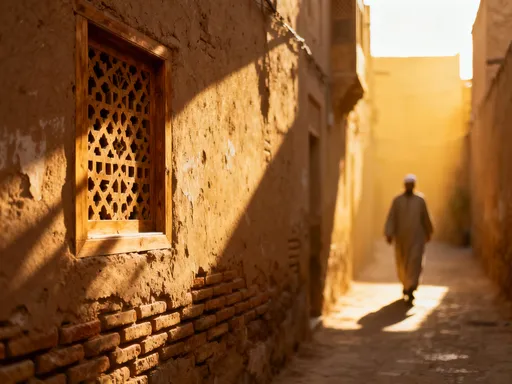
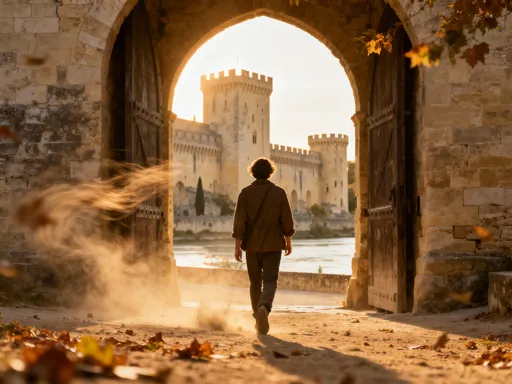
Arriving by train, the first glimpse of Avignon is framed by the distant silhouette of the Palais des Papes rising above the tree line, its pale stone walls glowing under the Provençal sun. Stepping onto the platform, one is immediately struck by the quiet elegance of the city’s approach—no sprawling urban sprawl, no jarring modernity, just a gentle transition from the contemporary world into a place where time moves differently. A short walk from the station leads through the Porte de la Ligne, one of the original medieval gates, and suddenly, the atmosphere shifts. The air grows warmer, scented with the faint aroma of lavender and sun-baked stone. Plane trees line the narrow streets, their broad leaves filtering the sunlight into dappled patterns on the cobblestones below.
What surprises most newcomers is how compact Avignon’s historic center feels, yet how richly layered it is. Within less than a square kilometer, the city contains centuries of architectural evolution—from Roman foundations to Gothic spires, from Renaissance courtyards to 19th-century market halls. Unlike larger French cities where history is scattered among modern developments, Avignon’s old town remains almost entirely enclosed by its 14th-century ramparts, creating a sense of enclosure and intimacy. Locals stroll with baguettes tucked under their arms, children chase pigeons in the Place de l’Horloge, and café terraces buzz with quiet conversation. It’s a city that lives, not one preserved for display.
The sensory experience deepens with every step. The rhythmic chime of the cathedral bell marks the passing hours. The scent of roasting coffee drifts from open doorways. In spring and summer, the fragrance of blooming jasmine spills over ancient walls. These details aren’t curated for tourists; they are the natural byproducts of a community rooted in tradition. Avignon stands apart from other French destinations not because it is grander or more opulent, but because its cultural density is so concentrated and authentic. Here, history isn’t explained through plaques alone—it is felt in the texture of the walls, heard in the acoustics of stone corridors, and tasted in the local markets.
Palais des Papes: The Heartbeat of Avignon’s Legacy
Dominating the skyline like a fortress carved from time itself, the Palais des Papes is the soul of Avignon’s historical identity. Constructed between 1335 and 1364, this vast Gothic complex served as the residence of seven popes during the Avignon Papacy, a period when the Catholic Church’s leadership relocated from Rome to France. At the time, it was the largest Gothic building in Europe, a symbol of both spiritual authority and political power. Today, it remains one of the most significant medieval structures on the continent, a UNESCO World Heritage site that draws visitors not only for its scale but for the palpable sense of history that lingers in its halls.
Walking through the palace’s Great Audience Hall, one cannot help but imagine the weight of decisions made within these walls—papal decrees that shaped religious doctrine, diplomatic negotiations that influenced the fate of nations. The sheer size of the interior spaces is staggering: vaulted ceilings soar overhead, and the stone floors echo with every footstep. The Chapelle Clémentine, with its perfectly preserved ribbed vaults and original stained glass, offers a moment of quiet reverence. Frescoes in the private papal apartments, though faded, still reveal intricate biblical scenes painted by artists from Siena and Avignon, evidence of the city’s role as a cultural crossroads.
For visitors, the Palais des Papes is more than a museum—it is an immersive journey. The official audio guide, available in multiple languages, provides context-rich narration that brings the spaces to life, explaining everything from the architecture’s defensive features to the daily routines of the papal court. To fully appreciate the site, it is recommended to visit early in the morning or late in the afternoon, when the light is soft and the crowds are thinner. Midday tours often feel rushed, with large groups moving through the chambers in waves. A guided tour, particularly one led by a licensed historian, can deepen understanding of the palace’s role in European history, including its controversial legacy as a symbol of ecclesiastical wealth during a time of widespread poverty.
The palace also hosts seasonal exhibitions that connect medieval history with contemporary art, a practice that reinforces Avignon’s identity as a city where past and present engage in continuous dialogue. Whether exploring the grand ceremonial rooms or the dimly lit prison cells beneath the fortress, visitors come away with a profound sense of how power, faith, and art once converged in this remarkable place.
Les Halles d'Avignon: A Cultural Feast for the Senses
If the Palais des Papes represents Avignon’s spiritual and political heart, then Les Halles d’Avignon is its beating culinary pulse. Located just steps from the Place Pie, this covered market has been a cornerstone of daily life since the 19th century. Open every morning except Monday, it is where locals gather not only to shop but to connect—to exchange news, share recipes, and celebrate the rhythms of the seasons. For visitors, it offers one of the most authentic experiences in the city, a chance to engage with Provençal culture through the universal language of food.
Entering Les Halles is an assault on the senses in the most delightful way. Rows of stalls overflow with seasonal produce: plump tomatoes still warm from the sun, baskets of golden mirabelles, pyramids of purple artichokes, and fragrant herbs tied in neat bundles. Cheese vendors display rounds of Banon, a soft goat cheese wrapped in chestnut leaves, alongside creamy Bleu des Causses and nutty Tomme de Pyrénées. Butchers offer saucissons sec, duck confit, and fresh lamb, while fishmongers proudly present briny oysters, sea bass, and anchovies cured in olive oil. The wine section features bottles of Côtes du Rhône, Vacqueyras, and Châteauneuf-du-Pape—each label a testament to the region’s viticultural heritage.
What makes Les Halles more than just a market is the human connection it fosters. Vendors greet regulars by name, offer samples with a smile, and patiently explain the differences between varieties of olives or types of honey. Visitors who take the time to engage—asking for recommendations, learning how to select the ripest melon, or simply sharing a moment of appreciation—are often rewarded with small gifts: a taste of tapenade, a sprig of thyme, or a tip on the best time to return for fresh bread. This is not transactional commerce; it is community in motion.
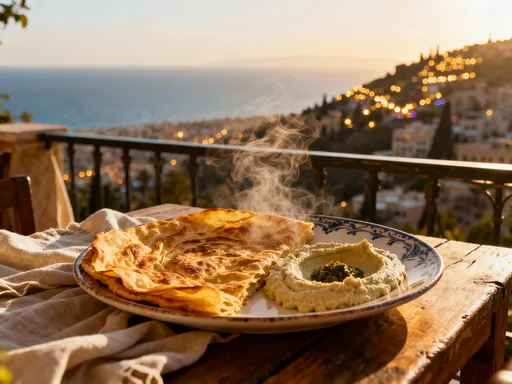
For those looking to eat like a local, a few essentials should not be missed. A slice of flan aux courgettes, a savory zucchini custard tart, makes for a perfect mid-morning snack. A paper cone of olives marinated in thyme and garlic is ideal for a riverside picnic. And no visit is complete without a stop at the truffle stand, where the earthy aroma of black Périgord truffles fills the air. While fresh truffles may be beyond most budgets, a small jar of truffle-infused honey or oil makes a memorable souvenir. The market also offers prepared foods—warm socca, a chickpea pancake from nearby Nice, or a slice of pissaladière, the Provençal onion tart—perfect for a quick, satisfying meal.
Off-the-Beaten-Path Gems: Chapels, Courtyards, and Hidden Art
Beyond the grand landmarks lies a quieter, more intimate Avignon—one revealed in its lesser-known corners. While the Palais des Papes and Pont d’Avignon draw the crowds, the city’s hidden chapels, secluded courtyards, and unexpected street art offer moments of reflection and discovery. These spaces, often overlooked by guidebooks, allow visitors to experience Avignon not as a checklist of sights but as a living, breathing entity with layers of meaning.
One such gem is the Église Saint-Agricol, a Romanesque church nestled just behind the cathedral. Though modest in size, it houses one of the oldest Christian sites in the city, with foundations dating back to the 11th century. Inside, the atmosphere is hushed and reverent. Faint traces of medieval frescoes cling to the stone walls, and a 17th-century organ still stands in the choir loft. The church’s crypt, accessible by a narrow staircase, contains remnants of earlier religious structures, offering a tangible link to Avignon’s earliest Christian community. Because it is rarely crowded, it is an ideal place to pause, reflect, and absorb the spiritual continuity of the site.
Nearby, the Cloître Saint-Louis provides a sanctuary of calm. Once part of a Jesuit college, this peaceful courtyard is surrounded by graceful arcades supported by slender columns. Orange trees grow in ceramic pots, and a central fountain murmurs softly. Benches invite visitors to sit and read, sketch, or simply listen to the birds. Unlike the bustling squares, this cloister feels timeless, a space where the pace of life slows and the mind can wander. It is also a favorite spot for local artists, who come to capture the play of light on stone in their sketchbooks.
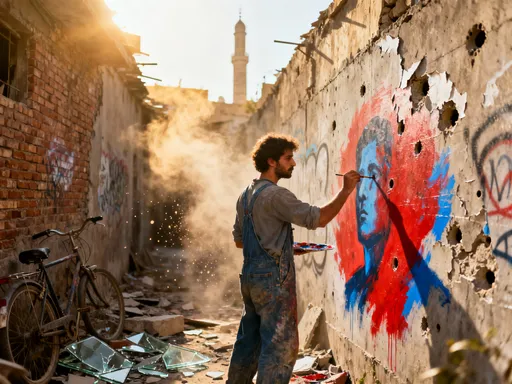
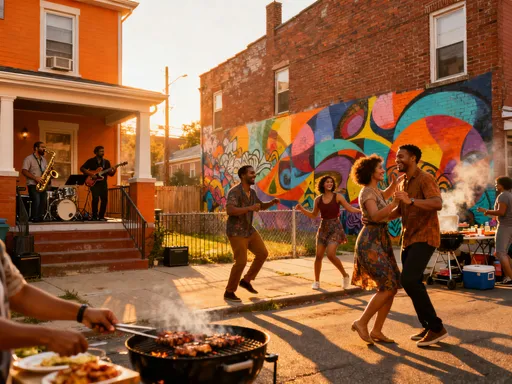
For those who enjoy urban exploration, Avignon’s back alleys reveal another dimension of creativity. In the Saint-Pierre district, tucked behind ancient walls, one finds vibrant murals and stencil art that contrast beautifully with the medieval architecture. These works, often inspired by Provençal folklore or environmental themes, are part of a city-supported initiative to integrate contemporary expression into historic spaces. A self-guided walking route connecting these sites—starting at Saint-Agricol, passing through the cloister, and ending in the art-filled alleys—offers a narrative of continuity: how Avignon honors its past while embracing new forms of cultural expression.
Festival Season: When Avignon Explodes with Performance
Each July, Avignon transforms into one of the most dynamic cultural capitals in Europe. The Festival d’Avignon, founded in 1947 by actor and director Jean Vilar, turns the city into a vast open-air theater. For three weeks, over a thousand performances take place in more than fifty venues—from the grand courtyard of the Palais des Papes to intimate chapels, hidden courtyards, and even converted warehouses. The festival is not just an event; it is a state of mind, a collective embrace of artistic experimentation and human expression.
The official program, known as the In, features curated productions by renowned theater companies, often tackling contemporary social and political themes through classical texts or avant-garde works. Performances in the Cour d’Honneur are particularly legendary—open-air shows under the stars, where the ancient stone walls serve as a natural backdrop. Tickets for these events sell out months in advance, and securing a seat requires planning. However, the true spirit of the festival may be found in the Off, a parallel program that includes over four hundred independent companies from around the world. Here, in small black-box theaters and pop-up stages, emerging artists present bold, unconventional work—from physical theater to solo monologues to immersive installations.
Walking through Avignon during the festival is an exhilarating experience. Street performers juggle fire in the squares. Actors in costume hand out flyers. Impromptu readings happen on park benches. The entire city becomes a stage, and every passerby a potential audience member. For visitors, the key to enjoying the festival is flexibility. Rather than trying to see everything, it is better to choose a few curated shows and allow room for serendipity—stumbling upon a powerful monologue in a converted chapel or joining a crowd gathered around a spontaneous street performance.
Accommodation during the festival can be challenging. Hotels book up a year in advance, and prices rise significantly. Many visitors opt for nearby towns like Villeneuve-lès-Avignon or even camping outside the city, commuting by bike or shuttle. Those who plan early can find guesthouses or private rentals within the walls. Regardless of where one stays, the festival’s energy is inescapable—a shared sense of excitement, of art as a communal experience. It is during these weeks that Avignon’s identity as a city of culture is most vividly alive.
Rhône River & Beyond: Expanding the Cultural Landscape
The Rhône River is not just a geographical feature; it is the lifeblood of Avignon. For centuries, it has served as a trade route, a source of irrigation, and a boundary between regions. Today, it offers one of the most beautiful vantage points of the city. A leisurely walk along the Quai de la Ligne or the Promenade du Peyrou provides panoramic views of the Palais des Papes, the Pont Saint-Bénézet, and the surrounding vineyards. In the early morning, mist rises from the water like breath, softening the outlines of the fortress. At sunset, the stone glows amber, reflecting in the slow-moving current.
The Pont Saint-Bénézet, though now incomplete, remains one of France’s most iconic bridges. Originally built in the 12th century, it once connected Avignon to Villeneuve-lès-Avignon across the Rhône. Repeated flooding and military conflict reduced it to just four of its original twenty-two arches, but its romantic ruin has inspired poets, painters, and pilgrims for centuries. Crossing the remaining span offers a unique perspective—not just of the river, but of the city’s relationship with nature and time. Interpretive panels along the walk explain the bridge’s engineering and historical role, including its use as a customs checkpoint and religious pilgrimage route.
For those willing to venture beyond the city walls, the surrounding region offers rich cultural extensions. A short walk across the modern bridge leads to Villeneuve-lès-Avignon, a quiet town with its own medieval treasures: the fortified Abbey of Saint-André, the Château de Villeneuve, and the Champ de Mars, a former military parade ground turned public park. Even more remarkable is the Carpentras synagogue, located about thirty kilometers north. One of the oldest active synagogues in France, dating back to the 14th century, it stands as a testament to the region’s long-standing Jewish community, which thrived under papal protection during the Avignon Papacy. Though visits require advance arrangement, the experience is deeply moving—a place of quiet resilience and continuity.
These excursions deepen the understanding of Avignon not as an isolated monument but as part of a broader cultural landscape. The river, the bridges, the neighboring towns—all contribute to a narrative of connection, exchange, and endurance.
Why Avignon Stays With You: The Emotional Resonance of Place
Long after the suitcase is unpacked and the photos uploaded, Avignon lingers in the memory not as a collection of sites but as a feeling. It is the warmth of sun on stone, the taste of ripe figs bought at the market, the echo of a violin in a hidden courtyard. It is the realization that culture, at its best, is not something one observes from a distance but something one steps into, wears like a second skin, lives moment by moment.
What makes Avignon unique is not merely its history, though that is profound. It is not just its art, though that is magnificent. It is the way all of it—architecture, cuisine, performance, daily ritual—comes together in a seamless whole. There is no separation between the museum and the street, the past and the present, the tourist and the local. One eats where the residents eat, walks where history was made, and breathes the same air that carried the voices of popes and poets.
This emotional resonance is what stays. It is the quiet pride of a vendor offering a sample of cheese, the hush inside a 900-year-old chapel, the laughter of children playing where cardinals once walked. Avignon does not shout its significance; it whispers it, in the rustle of leaves, the chime of bells, the texture of time-worn stone. It invites not passive observation but active presence.
To visit Avignon is to accept an invitation: to slow down, to listen, to be part of a story still unfolding. It is to check in not just to a hotel, but to a way of life that honors continuity, beauty, and human connection. For the traveler seeking meaning, authenticity, and grace, Avignon is not just a destination. It is a homecoming.