How I Blew My First Portfolio — And What It Taught Me About Fund Management
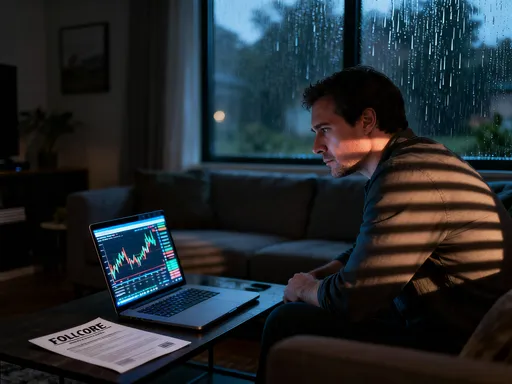
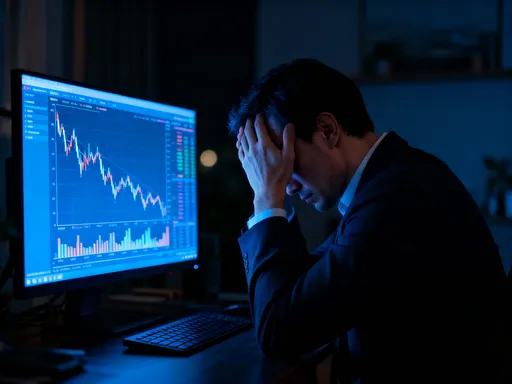
I remember staring at my screen, watching my portfolio bleed value—month after month. I thought I was being smart: spreading money across funds, checking returns weekly, even bragging to friends. But I wasn’t managing risk—I was feeding my ego. That painful journey taught me the real cost of a broken investment mindset. It’s not just about picking funds; it’s about mastering yourself. What followed was a series of hard-earned lessons in humility, discipline, and the quiet power of consistency. This is the story of how I lost control—and how I rebuilt not just my portfolio, but my entire approach to managing money.
The Wake-Up Call: When My Fund Strategy Crashed
At the start, I believed I was doing everything right. I had diversified across mutual funds and ETFs, invested in different sectors, and checked my balances regularly. I even printed out quarterly performance charts to show my family. I felt responsible, informed, and in control. But when a broad market correction hit, my portfolio dropped by nearly 30% in less than nine months—far more than the average index decline. That’s when I realized something was deeply wrong. My so-called balanced strategy wasn’t protecting me; it was amplifying my exposure. I hadn’t built a plan based on long-term goals or risk capacity. Instead, I had constructed a house of cards supported by confidence, not clarity.
The truth was, I had mistaken diversification for strategy. I assumed that owning multiple funds automatically reduced risk, but I hadn’t examined what those funds actually held. Many overlapped in technology and consumer discretionary stocks, so when those sectors declined, nearly all my holdings fell together. I had not diversified risk—I had merely diversified fund names. Worse, I had ignored my own investment horizon and emotional tolerance for volatility. When losses mounted, I didn’t stay the course. I reacted—shifting allocations, selling low, and buying high in a panic. The crash wasn’t caused by the market alone; it was enabled by my lack of a real framework.
This moment became my wake-up call. I began to see that fund management isn’t just about selecting assets—it’s about aligning those choices with personal financial goals, timeframes, and emotional resilience. I had focused on the mechanics of investing without addressing the mindset behind it. Recognizing that the failure was internal, not external, was the first step toward change. I stopped blaming market conditions and started asking harder questions: What am I really trying to achieve? How much risk can I truly afford—financially and emotionally? And most importantly, who am I investing for? The answers reshaped everything.
Misreading Risk: The Illusion of Safety in Fund Selection
One of the most dangerous assumptions I made was equating fund labels with safety. I believed that a fund labeled “conservative” or “income-focused” was automatically low-risk. I poured money into funds with names like “Stable Growth” or “Capital Preservation,” assuming they would protect me during downturns. But when markets turned, many of these funds still lost significant value. I learned the hard way that a label doesn’t change a fund’s underlying holdings—or its volatility. Risk isn’t defined by marketing; it’s defined by composition, strategy, and correlation to broader market movements.
What I failed to understand was the difference between perceived risk and actual risk. Perceived risk is what we feel—our gut reaction to a fund’s name, past performance, or sales pitch. Actual risk is measurable: it includes volatility (how much the fund’s value swings), drawdown (the deepest loss during a period), and correlation (how closely it moves with other assets). For example, two funds might both be labeled “moderate,” but one could be heavily invested in high-dividend tech stocks while the other holds government bonds and utilities. Their risk profiles are entirely different, even if they appear similar on the surface.
I began analyzing my funds not by their names, but by their behavior. I looked at historical volatility, sector concentration, and how they performed during past recessions. I discovered that some of my “safe” funds had high exposure to interest rate changes or credit risk—factors I hadn’t considered. This shift in perspective allowed me to move from emotional decision-making to evidence-based evaluation. I started asking not “Does this fund sound safe?” but “What exactly is this fund holding, and how does it behave under stress?” That simple change helped me build a portfolio that reflected my true risk tolerance, not just my hopes for safety.
Today, I no longer rely on fund labels to guide my choices. Instead, I examine prospectuses, review asset allocations, and assess how each fund contributes to the overall balance of my portfolio. I also pay attention to how funds interact with one another. A collection of individually “safe” funds can still create a risky portfolio if they all react the same way to economic shocks. True risk management means understanding not just what you own, but how your holdings work together—or fail to work together—when it matters most.
Chasing Returns: Why Past Performance Is a Trap
There was a time when I rearranged my entire portfolio because one fund had outperformed the rest for two consecutive quarters. It seemed logical: if a fund was winning, why not put more into it? I moved money from slower-performing funds into the top performer, convinced I was optimizing my returns. Within a year, that star fund had fallen to the bottom of the rankings. I had bought high and was now sitting on losses. This experience taught me one of the most enduring lessons in fund management: past performance is not a reliable predictor of future results.
Chasing returns is a common but costly mistake. It’s driven by a natural human tendency to extrapolate recent trends into the future. When a fund delivers strong returns, we assume it will continue to do so. But markets are cyclical, and outperformance often comes after a surge in a particular sector—like tech in a bull market or energy during inflation spikes. By the time retail investors notice and invest, the peak may already have passed. What looks like smart timing is often just catching the tail end of a cycle.
Research consistently shows that investors who chase returns underperform those who maintain a disciplined, long-term allocation. A study by Dalbar, for example, found that over a 20-year period, the average equity fund investor earned significantly less than the S&P 500 index—not because the funds failed, but because investors bought and sold at the wrong times. They bought after prices rose and sold after they fell, locking in losses and missing recoveries. This behavior is fueled by recency bias, the mental shortcut that gives disproportionate weight to recent events.
The solution isn’t to avoid strong-performing funds altogether, but to evaluate them within the context of a broader strategy. Instead of asking “Which fund has done best lately?”, I now ask “Does this fund fit my long-term goals and risk profile?” I also look at performance over full market cycles, not just the last quarter or year. A fund that performs steadily through ups and downs is often more valuable than one with explosive but short-lived gains. Most importantly, I’ve built rules into my process: I rebalance on a schedule, not in reaction to headlines, and I avoid making allocation changes based on short-term performance. Discipline, not excitement, guides my decisions.
Overcomplicating the Portfolio: More Funds ≠ Better Results
I once believed that the more funds I owned, the safer and smarter my portfolio would be. I thought complexity equaled sophistication. At one point, I held 12 different funds—mutual funds, index funds, sector ETFs, international funds, and dividend-focused vehicles. I told myself I was thoroughly diversified. But when I mapped out their holdings, I discovered a shocking truth: many of these funds overlapped significantly. Several were heavily invested in the same large-cap U.S. stocks. Others tracked similar indexes or reacted to the same economic drivers. I hadn’t increased diversification—I had increased noise.
True diversification means reducing risk by spreading investments across uncorrelated assets—those that don’t move in the same direction at the same time. But if multiple funds hold the same underlying securities, you’re not diversifying risk; you’re duplicating it. Worse, a bloated portfolio makes it harder to monitor performance, assess fees, and make informed decisions. I was spending more time managing fund relationships than focusing on my financial goals. The complexity I thought was protecting me was actually obscuring clarity.
I decided to simplify. I consolidated overlapping funds and focused on core holdings that provided broad market exposure with minimal redundancy. For example, instead of owning three different U.S. large-cap funds, I chose one low-cost index fund that covered the same ground. I replaced niche sector funds with broader market ETFs that offered more stable, long-term growth potential. This reduced overlap, lowered fees, and made my portfolio easier to understand and maintain.
The result was surprising: my returns didn’t suffer—in fact, they improved. With fewer funds, I could focus on quality over quantity. I paid more attention to expense ratios, tax efficiency, and strategic alignment. I also found it easier to rebalance and adjust my allocations when needed. Simplicity didn’t mean sacrificing opportunity; it meant removing distractions. Today, my portfolio includes fewer than six core funds, each serving a clear purpose. I’ve learned that sophistication in investing isn’t about how many funds you own, but how well they work together to support your goals.
Ignoring Costs: The Silent Killer of Returns
For years, I barely noticed the fees I was paying. Expense ratios of 1% or 1.2% seemed small—just a fraction of a percent. I told myself they were the cost of professional management. But over time, those small percentages compounded into massive losses. I didn’t realize that a 1% annual fee could consume nearly 20% of my potential returns over 20 years. That’s not a cost—it’s a drag, and it was silently eroding my wealth.
Costs come in many forms: management fees, transaction charges, load fees, and even tax inefficiencies. Some funds charge front-end loads, taking a cut when you invest. Others have 12b-1 fees for marketing and distribution. Even no-load funds have ongoing expense ratios that reduce net returns. I began tracking every cost, comparing funds not just on performance but on value after fees. What I found was eye-opening: two funds with similar strategies could have dramatically different net returns simply because one had half the expense ratio of the other.
I switched from high-cost actively managed funds to low-cost index funds and ETFs wherever possible. The difference was immediate. I wasn’t chasing higher returns—I was preserving more of the returns I was already earning. A fund with a 0.03% expense ratio doesn’t need to outperform a 1% fund by much to deliver better long-term results. In fact, over decades, the lower-cost fund will almost always win, even if its pre-fee performance is slightly lower.
I also started paying attention to trading costs. Frequent buying and selling generate commissions and bid-ask spreads, which add up over time. By adopting a buy-and-hold approach and rebalancing only periodically, I reduced unnecessary transactions. I also considered tax implications, favoring tax-efficient funds in taxable accounts. Today, cost awareness is a cornerstone of my strategy. I evaluate every fund through a cost-benefit lens: does the potential value justify the fees? If not, I look for a more efficient alternative. Saving on costs isn’t glamorous, but it’s one of the most reliable ways to improve long-term outcomes.
The Discipline Gap: Sticking to the Plan When Emotions Run High
Even after I built a better strategy, I still struggled to stick with it. During market downturns, fear crept in. I’d see red numbers on my screen and feel the urge to do something—anything—to regain control. I’d tweak allocations, sell funds I thought were too risky, or shift into cash. Then, when markets recovered, I’d miss the early gains, waiting for the “perfect” moment to re-enter. I wasn’t following my plan; I was reacting to emotions. And each impulsive decision chipped away at my progress.
Behavioral finance explains this pattern through biases like loss aversion—the tendency to feel losses more deeply than gains—and recency bias, which makes us overvalue recent events. These aren’t flaws; they’re human instincts. But in investing, they can be destructive. The market rewards patience, not panic. The best time to buy is often when fear is highest, but that’s also when our instincts tell us to run.
To bridge the discipline gap, I built systems that remove emotion from decision-making. I set a fixed rebalancing schedule—once a year—regardless of market conditions. I established rule-based triggers: if an asset class drifts more than 5% from its target, I rebalance. I also created an investment policy statement outlining my goals, risk tolerance, and strategy, which I review annually. These tools don’t eliminate emotions, but they create guardrails that keep me on track.
I also practice accountability. I share my plan with a trusted family member and review it with them periodically. Knowing I’ll have to explain any major changes keeps me from acting impulsively. Over time, these practices have helped me develop patience and consistency. I no longer expect to time the market. I expect to stay the course. And that shift—from reaction to routine—has made all the difference.
Building a Smarter Mindset: From Reactive to Strategic Fund Management
Today, my approach to fund management is no longer driven by emotion, ego, or excitement. It’s built on a foundation of clarity, discipline, and self-awareness. I no longer chase returns, overcomplicate my portfolio, or ignore costs. Instead, I focus on what truly matters: aligning my investments with my long-term goals, managing risk realistically, and maintaining consistency through market cycles.
I’ve learned that sustainable wealth isn’t created by picking the next hot fund or timing the market. It’s built slowly, through thoughtful decisions and the courage to do nothing when everything feels urgent. My portfolio is simpler, more efficient, and better aligned with who I am and what I need. I’ve replaced speculation with strategy, and impulse with intention.
The most valuable lesson wasn’t about funds—it was about myself. Investing is not just a financial activity; it’s a reflection of our values, fears, and habits. By understanding my own behavior, I’ve become a better investor. I don’t expect perfection. I expect progress. And that mindset—rooted in patience, awareness, and continuous learning—is the real key to lasting financial success.